Posts Tagged john gardner
Acoustic Transformation at New Harmony: Preserving Art, Improving Sound
Posted by Acoustics First in Absorption, Art Galleries, Articles, Customer Feedback, Diffusion, Multipurpose Rooms, Museums, Music Rehearsal Spaces, Product Applications on April 27, 2026
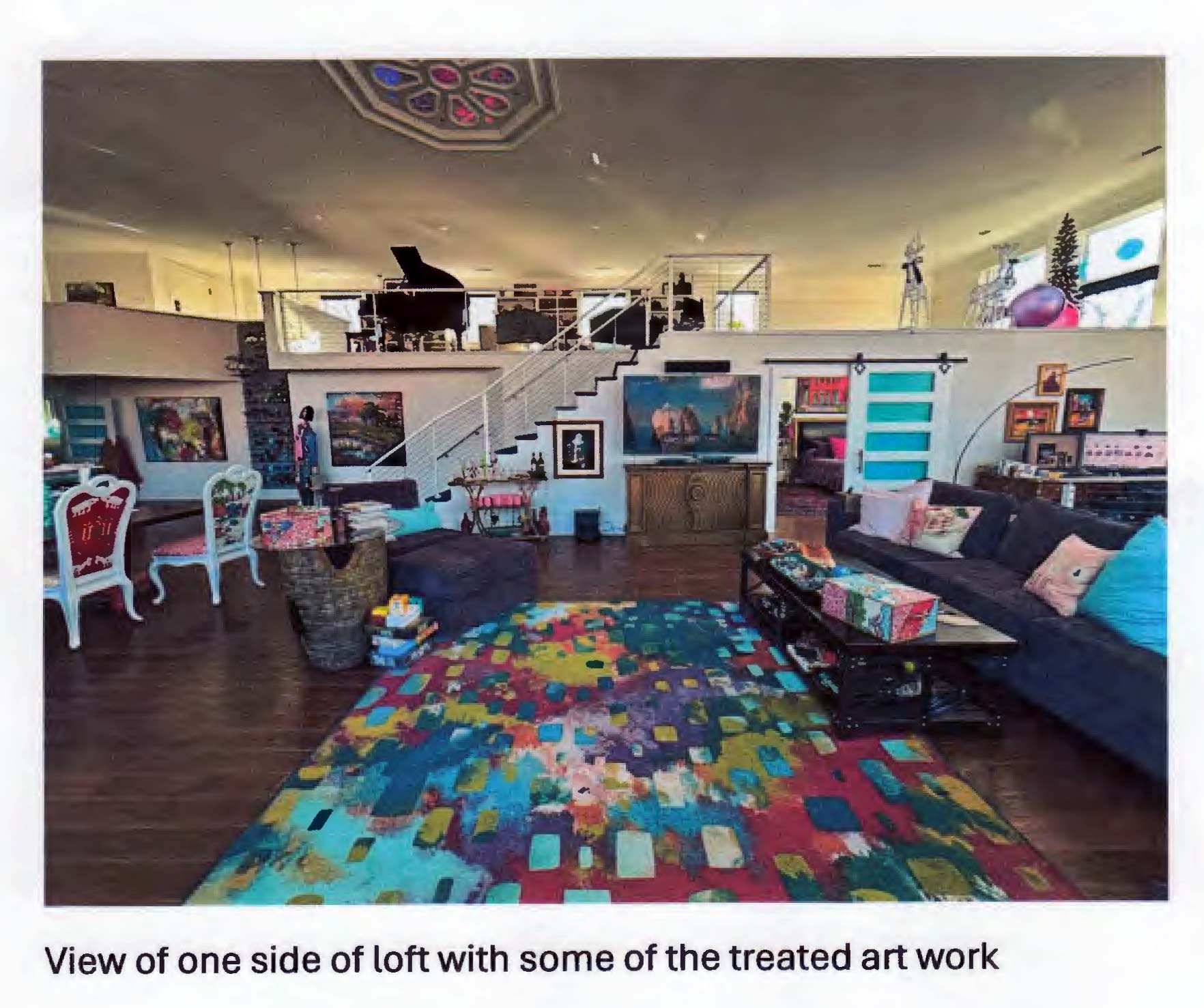
In New Harmony, Indiana, there is a former Odd Fellows Lodge repurposed as a private residence—the main hall doubles as an event and performance space. Measuring 80 by 40 feet with a 14-foot ceiling, the room features a mezzanine, raised stage, large windows, and an extensive collection of artwork. While visually striking, the space presented serious acoustic challenges.
Acoustics veteran, John Gardner was engaged to address these issues after experiencing a VIP performance tied to a blues festival. The goal was clear: improve the sound without disturbing the artwork or compromising the room’s aesthetic.
The Challenge: Excessive Reverberation and Harsh Reflections
Initial assessment and measurements revealed a highly reverberant and reflective environment:
- Reverberation times:
- ~3.5 seconds at 500 Hz
- Over 4 seconds at 1 kHz
- A pronounced “chatter” or flutter echo that degraded clarity
- Strong reflections from walls, mezzanine face, and windows
- Poor intelligibility for both speech and live music
Further analysis showed:
- Extended decay times in mid frequencies
- A rising frequency response:
- +12 dB from 63 Hz to 6.3 kHz
- High-frequency roll-off beginning near 8 kHz
- Noticeable slap-back echoes from rear wall surfaces
The Solution: Integrated, Art-Conscious Treatments
Given the requirement to preserve the room’s visual identity, all treatments were carefully selected and adapted to blend seamlessly into the environment.
Key treatments included:
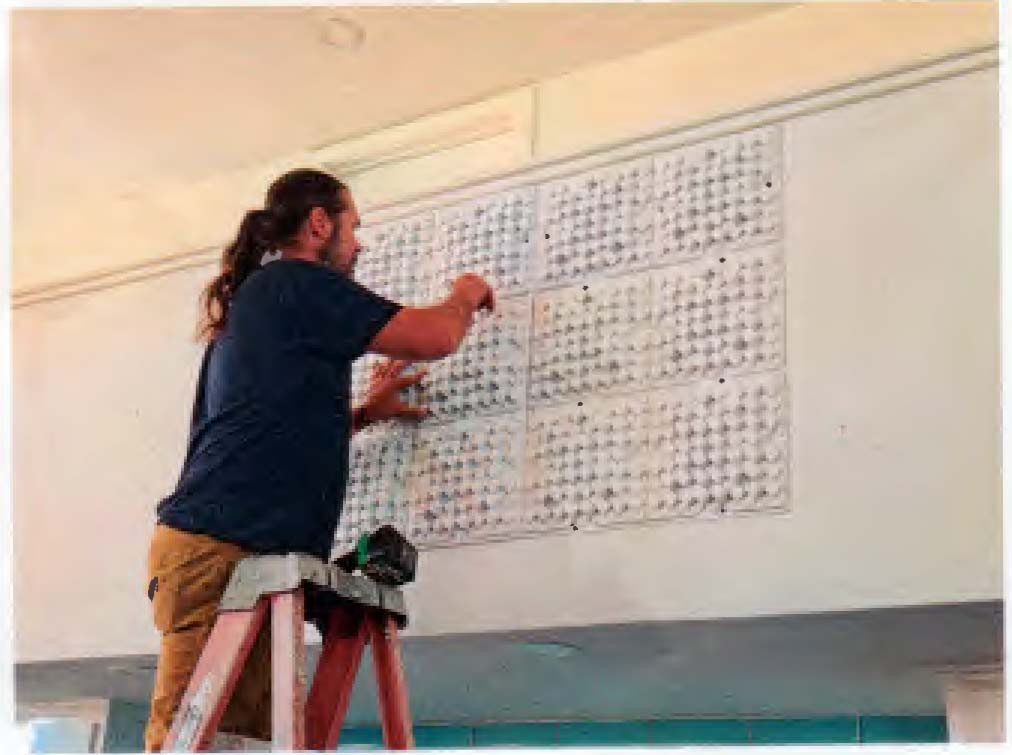
- Mezzanine Face – Diffusion
- Installed a series of ArtDiffusor® Model F diffusors
- Arranged in a continuous matrix across the mezzanine face
- Positioned against existing molding for a clean, intentional look
- Purpose: break up reflections and reduce flutter echo without deadening the space
- Rear Wall – Absorption
- Installed Tone Tiles®
- Artist-painted to match the room while maintaining acoustic performance
- Purpose: reduce slap and high-frequency reflections
- Reflective Wall Treatment – Absorption + Aesthetic Matching
- Covered a large reflective wall with Sound Channels® wall fabric
- This material is acoustically absorptive, not transparent.
- Original paintings were reinstalled over the treated surface
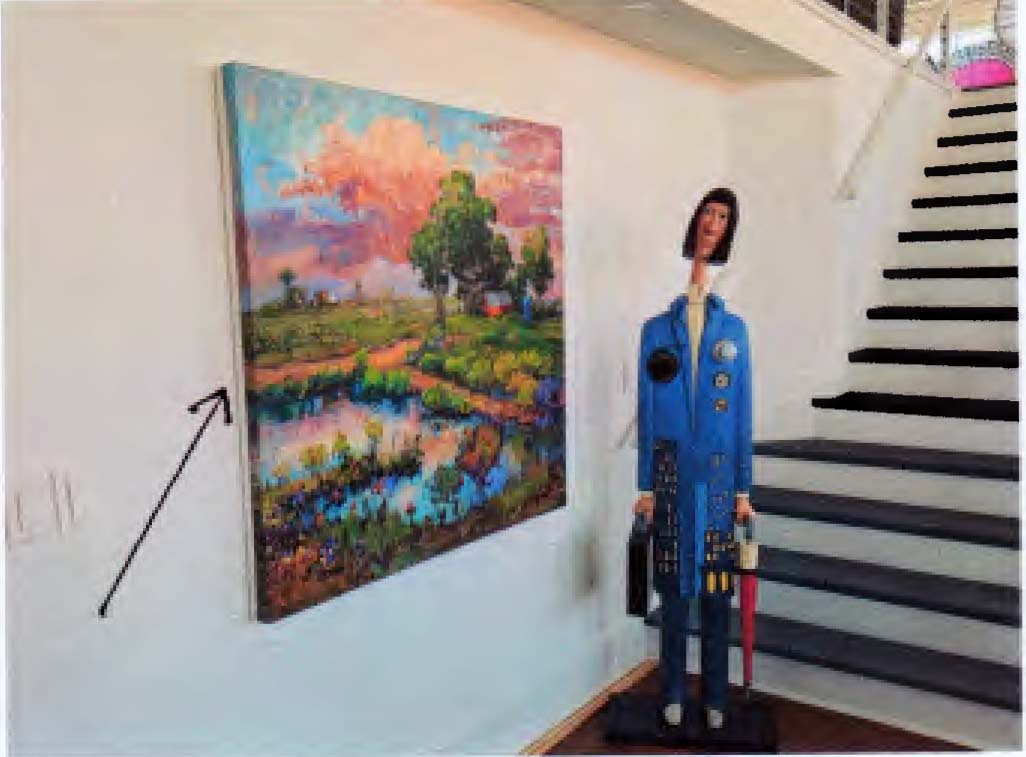
- Artwork Enhancement – Distributed Absorption
- Added Sonora® panels (1-inch thick) behind existing canvas artwork
- Turned each piece into a functional absorber
- Created slight diaphragm damping effect due to the air gap behind canvases
- Maintained full visual integrity of the collection
- Window Treatment – Removable Absorption
- Installed custom-fit Sonora® panels within window frames
- Panels secured with minimal hardware and used only during performances
- Addressed reflections from large glass surfaces near the stage
Results: Balanced Acoustics Without Visual Compromise
Post-treatment measurements showed clear improvement:
- Reverberation reduced to:
- ~2.1 seconds at 500 Hz
- ~3.4 seconds at 1 kHz
- Reduced flutter echo and slap-back reflections
- More controlled and even frequency response
Performance Outcome: Proven in Practice
The ultimate validation came during the following year’s festival:
- The returning headline performer commented on how good the room sounded
- Performers were able to clearly hear themselves on stage
- Audience members and owners noted significantly improved clarity and warmth
Conclusion
The New Harmony project highlights how thoughtful acoustic design can coexist with architectural and artistic priorities. By using targeted solutions like ArtDiffusor® Model F Diffusors, Tone Tiles®, Sound Channels®, and Sonora® panels, John Gardner successfully transformed a challenging space into an acoustically balanced performance environment—without compromising its character.
S.A.M.M.™ – Smart Sound Management
Posted by Acoustics First in Absorption, DIY, Mentions, Products, Uncategorized on April 1, 2021

S.A.M.M.™
Sound Attenuation Matrix Management
by Acoustics First®
20 Years ago, John W. Gardner developed the ASP™ Panel Technology to maintain optimal acoustic performance of our acoustic absorber product lines – like the Sonora® Wall Panels. Recent developments have been made to augment this earlier technology, and our Research & Development team has evolved this technology into the “information age.”

Meet S.A.M.M.™, the smart way to manage your panel maintenance tasks.
S.A.M.M.™ Panels analyze the acoustic environment and use this information to track their exposure to sound pressure levels. This can be monitored real-time, either directly through the energy efficient OLED screen, or using any device with a web browser.
This technology allows more than just monitoring the acoustic environment. The S.A.M.M.™ Enabled panels have a HAL BIOS which runs a webserver daemon that gives you full-control of your panels and the acoustic environment…

… but this isn’t only for S.A.M.M.™ Enabled Panels!
After a simple firmware upgrade to your ASP™ panels, you will have full control over your entire acoustic environment – from anywhere in the world.
I am flattered that you have taken the time to reevaluate one of my lifetime projects. I owe all of my minimal knowledge… to my first professor… I LIRPA.
Dr. John Wesley Gardner
Watch the following video to see the history of the ASP™ panels developed by the irreverent, John W. Gardner, and their evolution into the Sound Attenuation Matrix Management Technology known as… S.A.M.M.™
S.A.M.M.™ is Open Source
Acoustics First® values innovation, and we can all stand on the shoulders of giants. Customers can build their own implementations and create the ideal solution for their environment. While you can use whichever hardware that you have access to, here is the hardware our research team used to develop our in house integration.
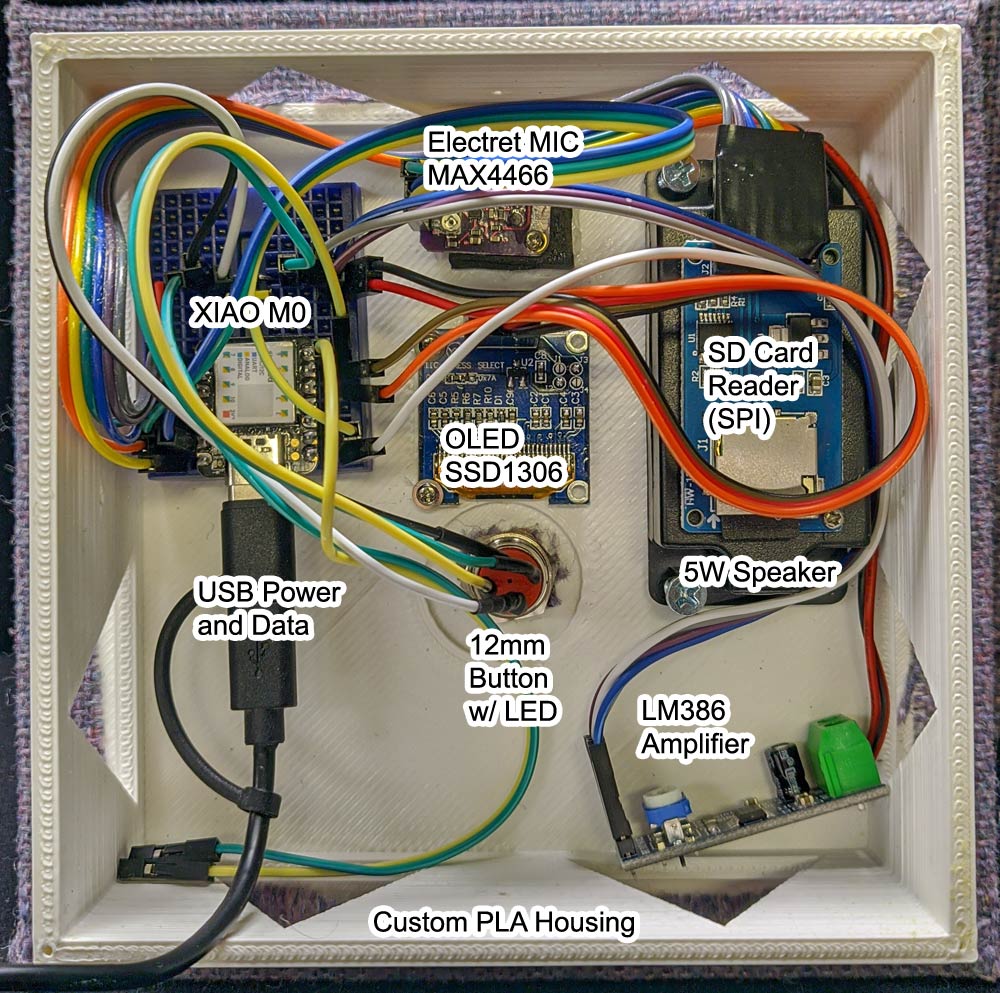
Components:
Custom 3D Printed Housing (PLA)
SEEEDuino XIAO M0+ (MCU)
128×64 OLED (SSD1306)
SD Card Reader (SPI)
Electret MIC w/Adj. Gain (MAX4466)
LM386 Amplifier
5 Watt/8 Ohm Speaker
12mm Momentary Switch (Red LED)
Optional – 10000mah USB Battery
(Click the image to enlarge)

Source Code:
The S.A.M.M.™ Source code was written in PlatformIO to be compatible with the Arduino Platform. The MCU is the SEEEDuino XIAO M0+ with the ARM Cortex M0 processor.
The libraries used in this project may need to be changed based on your hardware selections.

S.A.M.M.™ Web Console
Experience the S.A.M.M.™ Web Console interface. View the real-time output of the first S.A.M.M.™ unit, installed in the Acoustics First® R&D LAB. You can view the current capacity of the panel, as well as the average sound intensity – and as a bonus – we allow users to PURGE the panel remotely!
Stay up-to-date with cutting edge advances in acoustics with Acoustics First®.
 Acoustics First BLOG
You must be logged in to post a comment.