Archive for category Product Applications
Anechoic Chambers – Standards for Acoustic Measurement
Posted by Acoustics First in Absorption, Anechoic Chambers, Product Applications, Products, School & Educational Facilities, Uncategorized on September 3, 2026
Everything you wanted to know about anechoic chambers… but were afraid to ask.
An anechoic chamber is a specialized room engineered to eliminate sound reflections. Its walls, ceiling, and—in the case of a full anechoic chamber—the floor are covered with wedge-shaped foam or fiberglass absorbers that prevent sound waves from reflecting back into the test space. This creates a highly controlled acoustic environment that approximates free-field conditions, allowing the sound source to behave as though it were suspended in open air with no nearby reflective surfaces.
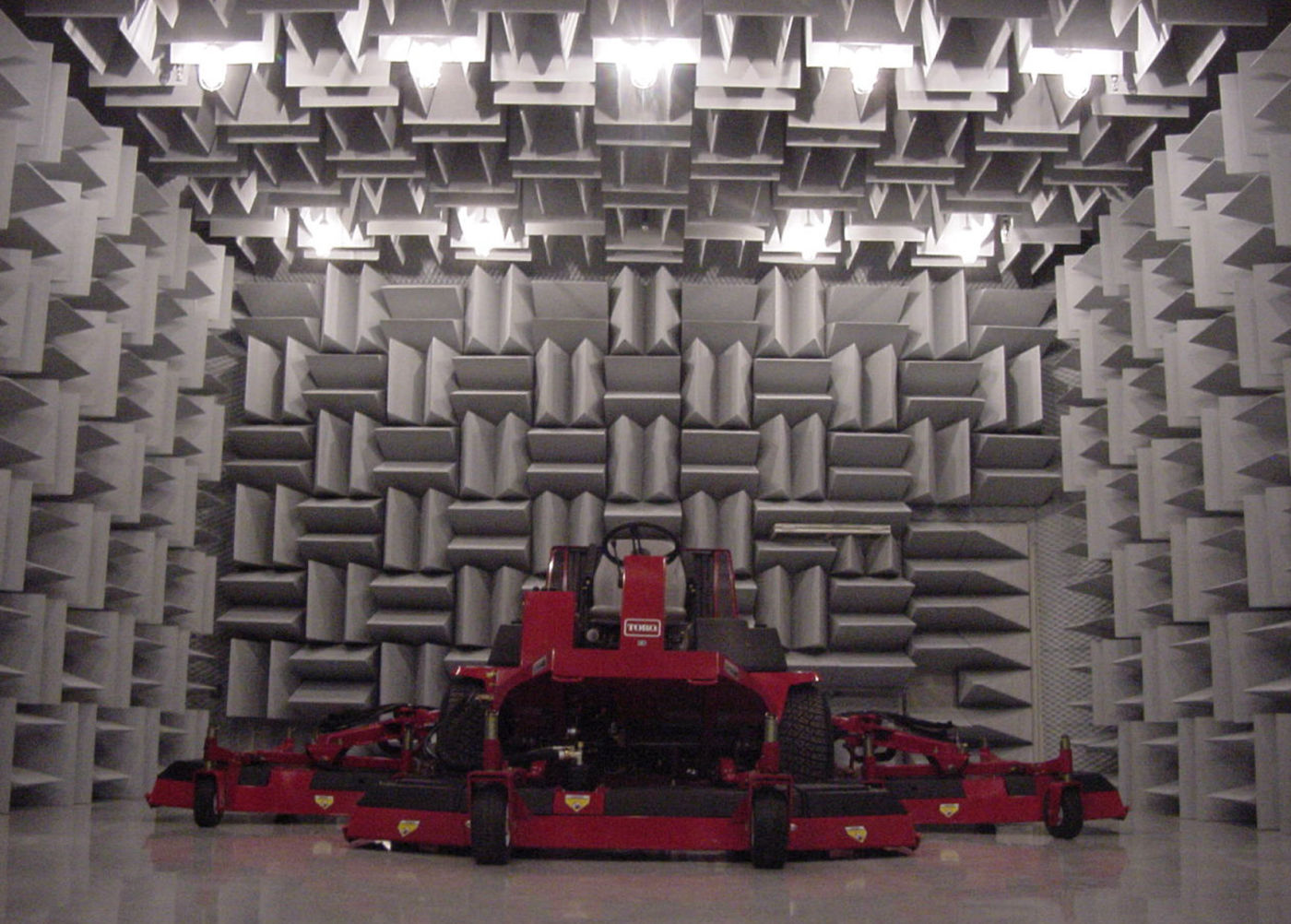
Such an environment is essential because acoustic measurements—including sound power, directivity, and frequency response—must be performed under known, reflection-free conditions to ensure repeatable, standards-compliant results. In the absence of these conditions, room reflections influence the measurements, causing the results to depend on the characteristics of the test room rather than the performance of the product being evaluated.
Here is a list of common measurement standards and the chamber/test requirements for each.
Precision Sound Power Measurement (ISO 3745)
ISO 3745 is the reference standard for precision sound power determination. It requires testing to be conducted in either a full anechoic or hemi-anechoic chamber that has been qualified to satisfy stringent free-field deviation requirements over the frequency range of interest. Chamber qualification requires demonstrating that the inverse-square law is maintained within ±1 dB at all specified measurement locations.
The typical chamber cut-off frequency ranges from 80 to 200 Hz, depending on the chamber dimensions and the depth of the acoustic wedges. Below the cut-off frequency, the chamber no longer provides true free-field behavior.
Engineering Sound Power Measurement (ISO 3744)
ISO 3744 establishes engineering-grade methods for sound power determination. While less stringent than ISO 3745, it still requires testing to be performed in a hemi-anechoic environment. The standard permits the application of environmental correction factors when the test environment does not achieve ideal anechoic performance, making it well suited for production-floor test cells and other facilities that approximate, but do not fully satisfy, free-field conditions.
Qualification of Free-Field Environments (ISO 2610)
ISO 26101 specifies the procedures for verifying that a test environment satisfies free-field performance requirements. It is the standard used to qualify an anechoic or hemi-anechoic chamber by confirming that the chamber’s acoustic characteristics meet the required free-field criteria and deliver the level of performance claimed for the facility.
Other Standards
- ECMA-74: IT equipment noise measurement (uses ISO 3745 or ISO 3744 as the underlying acoustic method)
- ANSI S12.55 / S12.56: North American equivalents of ISO 3744/3745
- ISO 11201-11205: Various sound pressure level determination methods, some requiring free field conditions
Chamber Size and Absorber Performance
The physical dimensions of an anechoic chamber determine its lowest usable frequency. As a general guideline, the chamber must be sufficiently large so that the distance between the sound source and each measurement microphone is at least one wavelength at the lowest frequency of interest.
For a chamber with a 100 Hz cut-off frequency, the minimum source-to-microphone distance is approximately 3.4 meters. Consequently, the internal chamber dimensions (excluding the absorber wedges) should be approximately 7–8 meters on each side for a hemi-anechoic chamber.
The depth of the acoustic absorber wedges governs the chamber’s low-frequency performance. Increasing wedge depth improves absorption at lower frequencies.
| Wedge Depth | Approximate Low-Frequency Cut-off |
| 200 mm | ~500 Hz |
| 500 mm | ~200 Hz |
| 1000 mm | ~80–100 Hz |
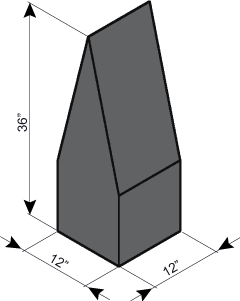
Common absorber materials include melamine foam (https://www.acousticsfirst.com/acoustical-foam-anechoic-chamber-wedges.htm , which is lightweight and inherently fire-retardant, and fiberglass, which provides superior low-frequency absorption but has a greater mass and higher cost.
Chamber Ambient Noise Floor
In addition to controlling sound reflections, an anechoic chamber must provide effective isolation from external noise sources. The ambient noise level within the chamber, measured with no test source operating, should be at least 6 dB—and preferably 15 dB—below the sound pressure level produced by the test object at the specified measurement positions.
Achieving these background noise levels typically requires a chamber constructed with multiple layers of high-mass materials, such as concrete and steel, combined with vibration-isolated mounting systems to minimize the transmission of structure-borne noise.
Alternatives to an Anechoic Chamber
Not every organization can justify the investment required for a purpose-built anechoic chamber, which typically ranges from $500,000 to more than $2 million. Fortunately, several practical alternatives are available, depending on the measurement objectives and required level of accuracy.
Sound Intensity Method (ISO 9614)
The sound intensity method, defined in ISO 9614, is inherently less sensitive to room reflections because sound intensity is a vector quantity. Unlike sound pressure, it differentiates between outgoing acoustic energy radiated by the test source and incoming energy reflected from surrounding surfaces. As a result, sound power can be determined in ordinary rooms without the need for anechoic treatment.
The primary trade-off is that this method requires specialized sound intensity probes and more complex measurement procedures than conventional sound pressure measurements.
Acoustic Test Boxes
For small products, such as electronic devices, individual components, and transducers, a desktop acoustic test box provides a controlled, low-noise environment that approximates anechoic conditions over a defined frequency range. These systems offer a significantly lower-cost alternative to a full-sized anechoic chamber and can be integrated directly into production-line testing.
Portable Acoustic Arrays
Modern acoustic imaging systems, commonly referred to as acoustic cameras, use portable microphone arrays to identify and localize noise sources in situ, whether on the factory floor, along a production line, or in field applications, without requiring an anechoic environment. Although these systems are not a substitute for standards-compliant sound power measurements, they provide a rapid and effective means of diagnosing and visualizing noise sources that would previously have required dedicated chamber testing.
Contact Acoustics First about your acoustic chamber project to find what sort of treatment is best suited for your application!
From Utility to Engineered Performance: Comparing Armstrong® 1B Perforated Tiles Vs. HiPer Panels®
Posted by Acoustics First in Absorption, Diffusion, Music Tracking Room, Product Applications, Products, Recording Facilities, Recording Studio, School & Educational Facilities, Studio Control Room, Vocal Booth, Voice Over on June 30, 2026
For decades, perforated acoustic panels have played an important role in shaping the sound of recording studios, broadcast facilities, civic buildings, and public spaces. While the iconic Armstrong® 1B perforated mineral fiber tile represented the standard for practical noise control throughout much of the twentieth century, modern acoustic engineering has transformed what perforated panels can accomplish. A comparison between the Armstrong® 1B and today’s Acoustics First® HiPer Panel® family illustrates just how far acoustic technology has advanced.

The Armstrong® 1B tile was designed as a utilitarian acoustic treatment. Manufactured from thin mineral fiber, the 1′ x 1′ panels featured either linear or random perforation patterns that allowed sound energy to enter the porous material for absorption – which increased the NRC of these tiles to a 0.55-0.60. Originally developed during WWII and used in military barracks and installations, these tiles eventually found their way into countless municipal buildings, schools, government facilities, and even legendary recording environments such as RCA and Sun Recording Studios. Their modest absorption characteristics, ease of installation, and economical construction made them a practical solution for reducing reverberation in a wide variety of spaces.

Despite their historical significance, the Armstrong® 1B tiles were fundamentally simple acoustic absorbers. The mineral fiber substrate behaved much like compressed fiberboard or heavy paper, relying solely on the porous material itself for sound absorption. While the perforations exposed more surface area to incoming sound, there was no engineered reflective face, no constrained barrier layer, and no intentional diffusion characteristics. Their primary function was simply to absorb a portion of the reflected sound energy.
Modern critical listening spaces demand considerably more sophisticated performance.
The Acoustics First® HiPer Panel® family builds upon decades of acoustic research using high-performance fiberglass substrates and engineered panel construction. Rather than functioning as simple absorbers, HiPer Panels® are carefully designed hybrid acoustic devices that combine broadband absorption with controlled reflection and diffusion. Where the Armstrong tiles had an NRC of 0.55 – 0.60, the HiPer panels increase this to a 0.90 NRC – but they also introduce tuned absorption and diffusion.

The original laminated HiPer Panel® incorporates a perforated fiberglass bonded to a constrained barrier septum layer. This engineered assembly allowed portions of the sound spectrum to be reflected while some acoustic energy passed into the fiberglass absorber, creating a more balanced acoustic response than a conventional porous panel. The result is an environment that maintains clarity, spaciousness, and natural musical energy instead of becoming acoustically “dead.”

The Hiper Panel® Impact takes a slightly different approach by utilizing a durable perforated reflective face over the fiberglass core. Its optimized perforation pattern and reflective surface are specifically engineered to provide controlled diffusion on top of tuned absorption, making it well suited for performance venues, mastering rooms, critical listening spaces, and recording studios where preserving acoustic life is just as important as controlling excessive reflections. This tuned absorption allows the low frequencies to be absorbed, while leaving the high frequencies so that the diffusion characteristics of the device (over 4Khz) will be more effective in creating a feeling of openness in the room.

The differences between these products extend well beyond appearance. While both feature perforated surfaces, the Armstrong 1B’s small perforations simply exposed a thin mineral fiber absorber. By contrast, the HiPer Panel® systems use perforation geometry, reflective facings, engineered barrier layers, and high-density acoustic fiberglass to create a far more efficient and balanced acoustic device. Instead of merely reducing reverberation, they help shape the acoustic character of a room.
More than fifty years after their introduction, Armstrong® 1B perforated tiles remain recognizable symbols of an earlier era of architectural acoustics. Many continue to serve in municipal offices, schools, police interview rooms, and other institutional settings where functional noise control is sufficient. In modern recording studios, listening rooms, and performance spaces, however, engineered systems like the Acoustics First® HiPer Panel® and Hiper Panel® Impact represent the evolution of acoustic treatment—combining advanced materials, acoustic science, and carefully tuned performance to meet the demands of today’s most critical listening environments.
Acoustic Transformation at New Harmony: Preserving Art, Improving Sound
Posted by Acoustics First in Absorption, Art Galleries, Articles, Customer Feedback, Diffusion, Multipurpose Rooms, Museums, Music Rehearsal Spaces, Product Applications on April 27, 2026
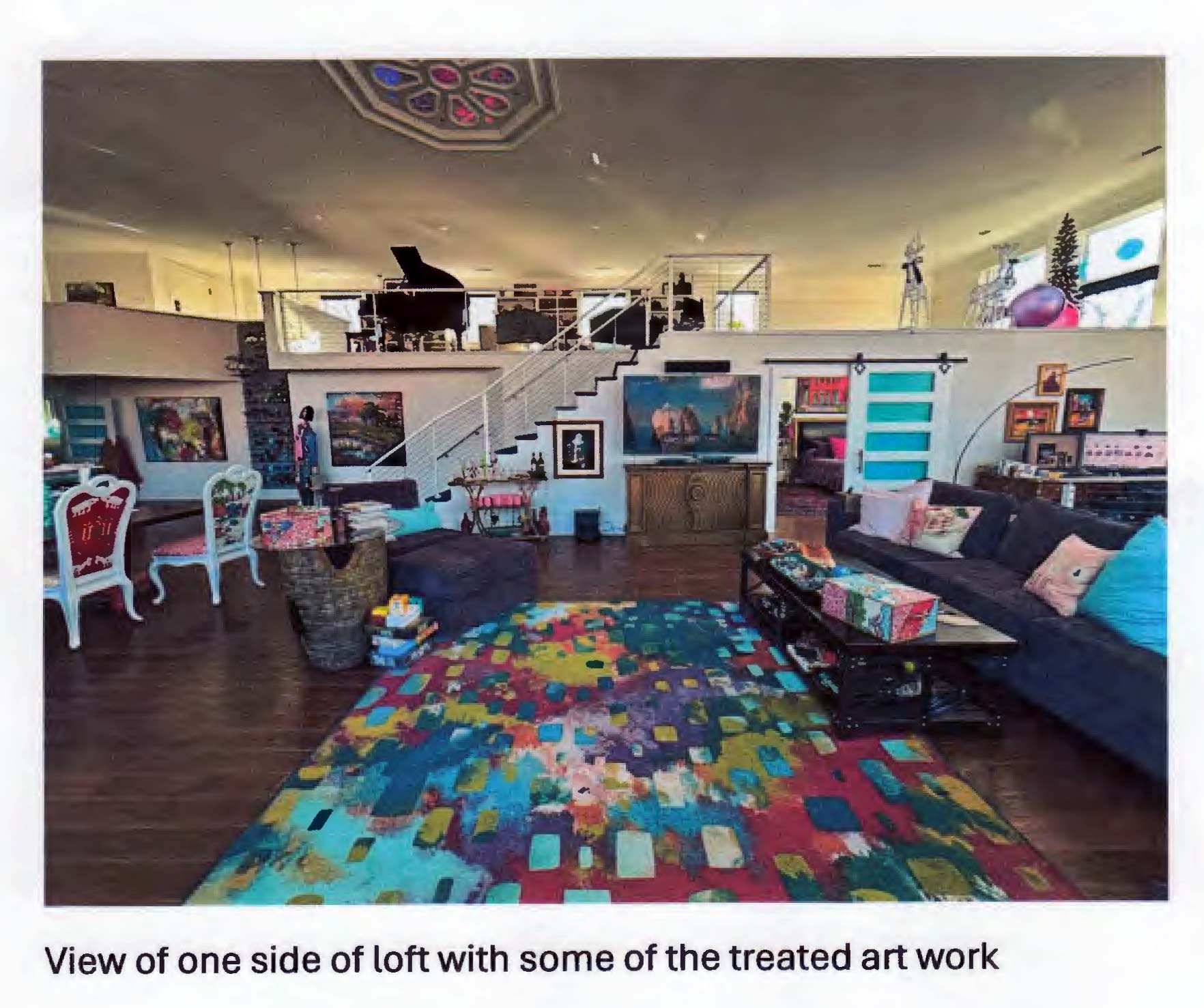
In New Harmony, Indiana, there is a former Odd Fellows Lodge repurposed as a private residence—the main hall doubles as an event and performance space. Measuring 80 by 40 feet with a 14-foot ceiling, the room features a mezzanine, raised stage, large windows, and an extensive collection of artwork. While visually striking, the space presented serious acoustic challenges.
Acoustics veteran, John Gardner was engaged to address these issues after experiencing a VIP performance tied to a blues festival. The goal was clear: improve the sound without disturbing the artwork or compromising the room’s aesthetic.
The Challenge: Excessive Reverberation and Harsh Reflections
Initial assessment and measurements revealed a highly reverberant and reflective environment:
- Reverberation times:
- ~3.5 seconds at 500 Hz
- Over 4 seconds at 1 kHz
- A pronounced “chatter” or flutter echo that degraded clarity
- Strong reflections from walls, mezzanine face, and windows
- Poor intelligibility for both speech and live music
Further analysis showed:
- Extended decay times in mid frequencies
- A rising frequency response:
- +12 dB from 63 Hz to 6.3 kHz
- High-frequency roll-off beginning near 8 kHz
- Noticeable slap-back echoes from rear wall surfaces
The Solution: Integrated, Art-Conscious Treatments
Given the requirement to preserve the room’s visual identity, all treatments were carefully selected and adapted to blend seamlessly into the environment.
Key treatments included:
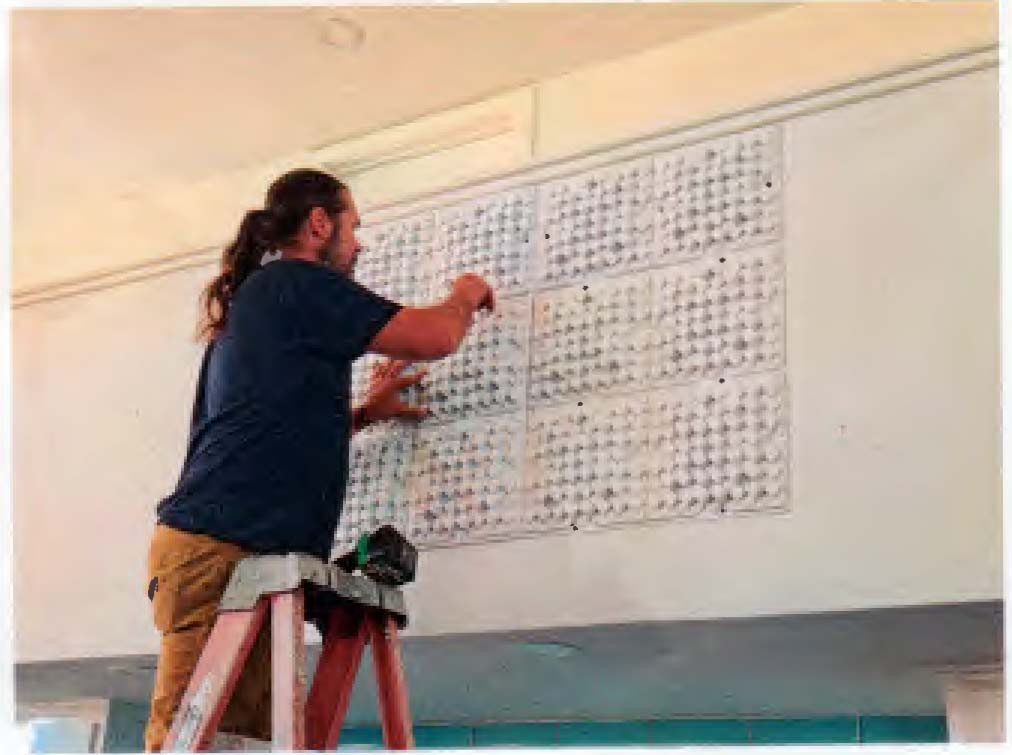
- Mezzanine Face – Diffusion
- Installed a series of ArtDiffusor® Model F diffusors
- Arranged in a continuous matrix across the mezzanine face
- Positioned against existing molding for a clean, intentional look
- Purpose: break up reflections and reduce flutter echo without deadening the space
- Rear Wall – Absorption
- Installed Tone Tiles®
- Artist-painted to match the room while maintaining acoustic performance
- Purpose: reduce slap and high-frequency reflections
- Reflective Wall Treatment – Absorption + Aesthetic Matching
- Covered a large reflective wall with Sound Channels® wall fabric
- This material is acoustically absorptive, not transparent.
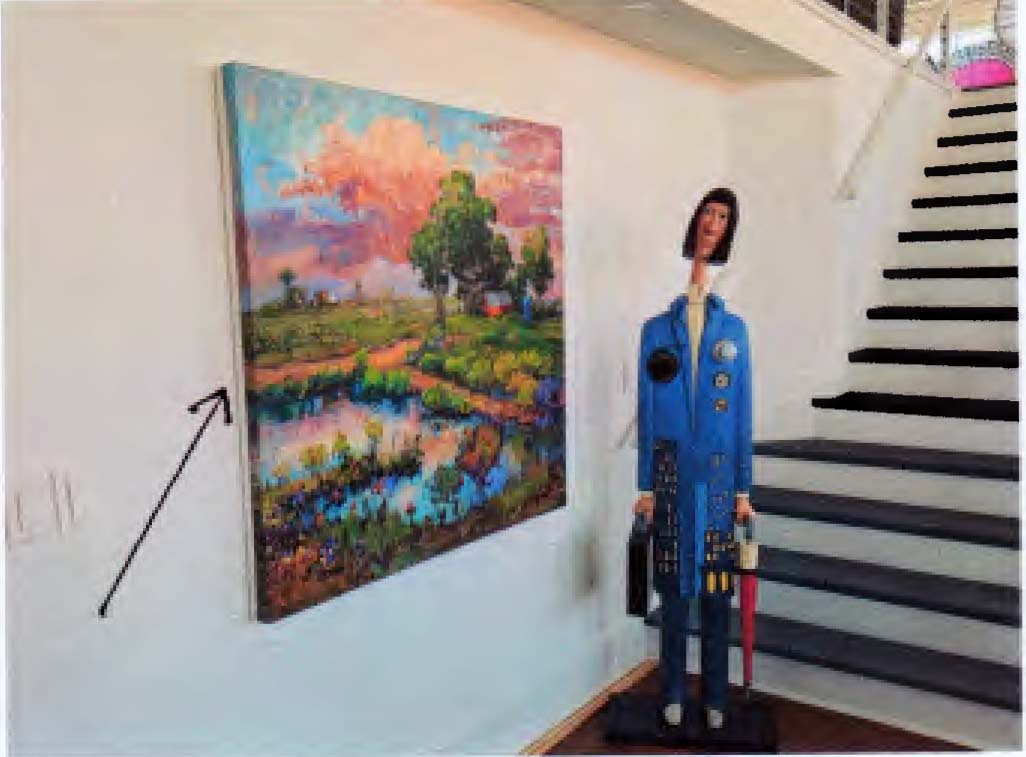
- Original paintings were reinstalled over the treated surface
- Artwork Enhancement – Distributed Absorption
- Added Sonora® panels (1-inch thick) behind existing canvas artwork
- Turned each piece into a functional absorber
- Created slight diaphragm damping effect due to the air gap behind canvases
- Maintained full visual integrity of the collection
- Window Treatment – Removable Absorption
- Installed custom-fit Sonora® panels within window frames
- Panels secured with minimal hardware and used only during performances
- Addressed reflections from large glass surfaces near the stage
Results: Balanced Acoustics Without Visual Compromise
Post-treatment measurements showed clear improvement:
- Reverberation reduced to:
- ~2.1 seconds at 500 Hz
- ~3.4 seconds at 1 kHz
- Reduced flutter echo and slap-back reflections
- More controlled and even frequency response
Performance Outcome: Proven in Practice
The ultimate validation came during the following year’s festival:
- The returning headline performer commented on how good the room sounded
- Performers were able to clearly hear themselves on stage
- Audience members and owners noted significantly improved clarity and warmth
Conclusion
The New Harmony project highlights how thoughtful acoustic design can coexist with architectural and artistic priorities. By using targeted solutions like ArtDiffusor® Model F Diffusors, Tone Tiles®, Sound Channels®, and Sonora® panels, John Gardner successfully transformed a challenging space into an acoustically balanced performance environment—without compromising its character.
Autism Spectrum Disorder and Acoustics
Posted by Acoustics First in Classrooms, Product Applications, Products, School & Educational Facilities, Sound proofing, Teaching Rooms on March 25, 2026
People with Autism Spectrum Disorder (ASD) frequently report different sensory experiences, especially with sound. Many experience hypersensitivity (overreaction to stimuli like noise or light) or hyposensitivity (reduced response, requiring stronger input). Unlike most individuals, they may not adapt to constant background noise, which can remain overwhelming. Tools like noise-canceling headphones and stim/fidget toys can help manage stress and support self-regulation.

Some autistic individuals also experience auditory processing disorder (APD), where sounds are heard but not easily understood. This can make following speech in noisy environments—like classrooms—especially difficult, even if other auditory skills remain strong.
Research on autism has often focused on traits, causes, and treatments, sometimes framing autistic individuals as the problem. A more balanced, modern, view considers how environments and nonautistic people contribute to disabling experiences. Under the social model of disability, society shares responsibility for reducing these challenges. Recent perspectives expand beyond individual traits to include social attitudes, accessibility tools, inclusive education, and building design.
The design of built environments plays a major role in comfort and performance, yet acoustics are often overlooked compared to lighting or air quality. Poor sound conditions—such as low signal-to-noise ratios—can hinder learning, particularly for children, people with hearing difficulties, or nonnative listeners. While accessibility standards address physical barriers, they rarely consider acoustic needs for autistic individuals. Studies show that high noise levels can increase distress-related behaviors in children living with autism. Both children and adults report that schools can be overwhelming due to noise, bright lights, and unpredictability, leading to fatigue and reduced learning.
To create more inclusive spaces, designers should focus on acoustics. This includes organizing layouts predictably, adding quiet “escape” areas, separating noisy and quiet zones, and using transitional spaces to ease sensory shifts. Effective sound isolation—through walls, windows, and floor/ceiling—is essential, as is reducing internal noise from building systems and other noise sources. Windows are often the weakest link through which sound can leak, but this can be mitigated with multi-pane window construction with an appropriately airtight and resilient joint sealant. The Sound Transmission Class (STC) and Outdoor-Indoor Transmission Class (OITC) of cavity wall systems can be improved with added mass, resilient layers and cavity absorption. Partitions should extend to their full height and be sealed to the structure of the roof deck or floor above. Penetrations through sound isolating partitions should be avoided. Wherever penetrations are unavoidable, they should be packed with insulation and sealed with a resilient joint sealant to minimize the leakage of sound.
Using sound-absorbing materials can further improve comfort. Sound Channels acoustic wall fabric is often specified in classrooms and “escape” rooms as it a very durable and cleanable material that provides sound absorption within speech frequencies, reducing echoes and overall noise levels.
Overall, designing for acoustic accessibility requires recognizing the diverse sensory experiences of autistic individuals. Inclusive environments should be shaped through thoughtful design and collaboration with autistic individuals, ensuring their lived experiences guide meaningful improvements.
References:
Caldas, Fernanda; Underwood, Samuel; Masiero Bruno S. and Wang, Lily M. Autism and Indoor Sounds Acoustics Today 20 (2) 21-29.
Big vs. Bigger: 2′ vs 4′ Acoustic Diffusers
Posted by Acoustics First in Diffusion, Product Applications, Products on December 16, 2025
A couple common form factors in acoustics are based on building material sizes. Ceiling grids are a common place to install acoustic devices, and you will find that many are built to either work in a 2’x2′, 2’x4′, or 4’x4′ ceiling grid installation. This makes sense, but did you know that these devices also perform differently in some cases due to their dimensions? This is especially true with acoustic diffusers.
When you’re tuning a room—whether it’s a studio, theater, rehearsal space, or even a high-end listening room—acoustic diffusers are one of those rare tools that improve clarity without taking the life out of the space. Designs like the Double Duty Diffuser, Pyramidal Diffusers, and Quadratic Diffusers all share that same mission: redistribute sound energy so your room feels open, natural, and honest.
But while they may look similar in concept, their size changes the game. A 2’x2′ panel and a 4’x4′ panel both diffuse sound, but their effect—especially in the low-frequency and low-mid ranges—can be very different.
2’x2′ Diffusers — Compact Control
2’x2′ units are the most modular diffusers in the lineup. Their smaller footprint makes them ideal for:
- Breaking up mid and high-frequency reflections
- Treating small and medium rooms
- Sitting comfortably in grid ceilings or tight wall spaces
Because of their size, 2’x2′ diffusers don’t interact as much with the low-frequency energy in a room. Bass waves—being physically large—tend to wrap around smaller objects. The result? Excellent clarity improvements in the mids and highs, with a very predictable diffusion performance. The Double Duty Diffuser and Pyramidal diffusers have been a standard in breaking up planar surfaces for decades. While their diffusion in low frequencies is limited at this size, the air cavities do help control some upper bass frequencies through absorption.
The tuned mid frequency effects of the 2’x2′ quadratic, and the smooth performance of the Double Duty or Pyramidal diffuser are perfect for control rooms, edit rooms, drum booths, and anywhere you want accuracy without sacrificing sparkle.

4’x4′ Diffusers — Where Diffusion meets Bass Control
Now we get to the big ones.
A 4’x4′ diffuser is similar in concept to its smaller relatives, but the scale moves it into a different acoustic category. At this size, diffusers begin to influence longer wavelengths, which opens the door to something smaller diffusers often struggle with…
Low-frequency interaction
Large diffusers present enough depth, volume, and surface area to affect the bass spectrum. The extra size creates cavities which are tuned to reduce bass, and they have surfaces large enough to redirect those lower frequencies.
- Break up standing waves in the low-mid range
- Reduce modes and nodes common in rectangular rooms
- Add a sense of openness to the bass field
- Prevent buildup behind listening positions
In other words: same diffuser concept, very different low-end behavior.
Wide-area coverage
A single 4’x4′ panel can modify a huge portion of a wall, creating an even, spacious character that feels less like “treatment” and more like a room that’s naturally well-behaved.
These panels shine in larger studios, live rooms, and worship spaces—anywhere you need diffusion that reaches deeper into the frequency spectrum – and can break-up large, flat, specular surface reflections, which are responsible for flutter, echoes, bass buildup, and long reverb times.
Which do you need?
There are two main factors in the decision: space and performance requirements. In certain environments, it’s impractical or impossible to install large 4’x4′ or larger diffusers; It also may not be the best solution – even if it may appear to be on paper. While a single, large barrel diffuser may appear ideal, you may not have enough physical space to allow the diffusion to develop – where several smaller diffusers would be the better solution.
In short, your physical space and acoustic conditions will dictate which size elements will give you the most benefit in your environment.


You must be logged in to post a comment.