In New Harmony, Indiana, there is a former Odd Fellows Lodge repurposed as a private residence—the main hall doubles as an event and performance space. Measuring 80 by 40 feet with a 14-foot ceiling, the room features a mezzanine, raised stage, large windows, and an extensive collection of artwork. While visually striking, the space presented serious acoustic challenges.
Acoustics veteran, John Gardner was engaged to address these issues after experiencing a VIP performance tied to a blues festival. The goal was clear: improve the sound without disturbing the artwork or compromising the room’s aesthetic.
The Challenge: Excessive Reverberation and Harsh Reflections
Initial assessment and measurements revealed a highly reverberant and reflective environment:
- Reverberation times:
- ~3.5 seconds at 500 Hz
- Over 4 seconds at 1 kHz
- A pronounced “chatter” or flutter echo that degraded clarity
- Strong reflections from walls, mezzanine face, and windows
- Poor intelligibility for both speech and live music
Further analysis showed:
- Extended decay times in mid frequencies
- A rising frequency response:
- +12 dB from 63 Hz to 6.3 kHz
- High-frequency roll-off beginning near 8 kHz
- Noticeable slap-back echoes from rear wall surfaces
The Solution: Integrated, Art-Conscious Treatments
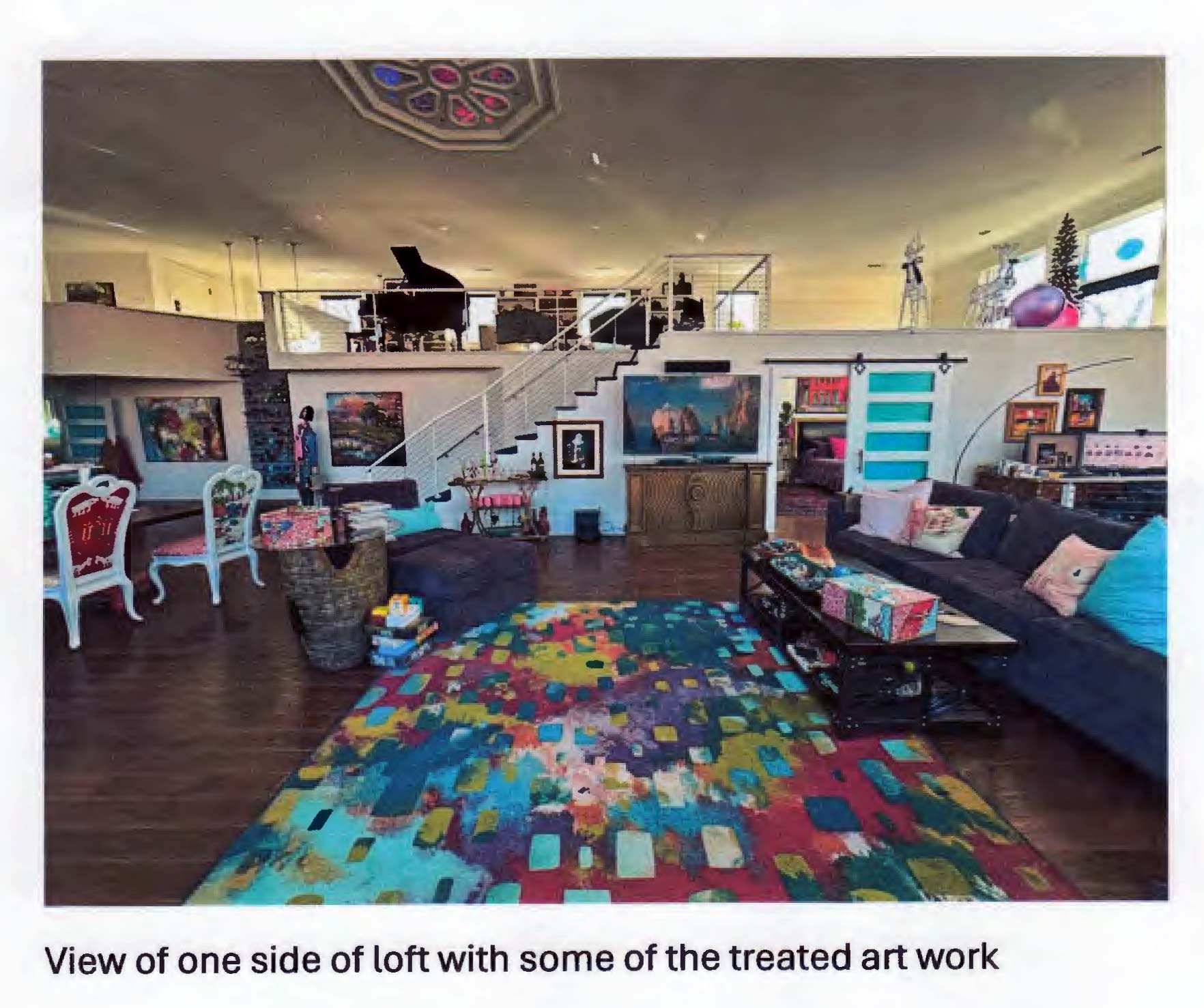
Given the requirement to preserve the room’s visual identity, all treatments were carefully selected and adapted to blend seamlessly into the environment.
Key treatments included:
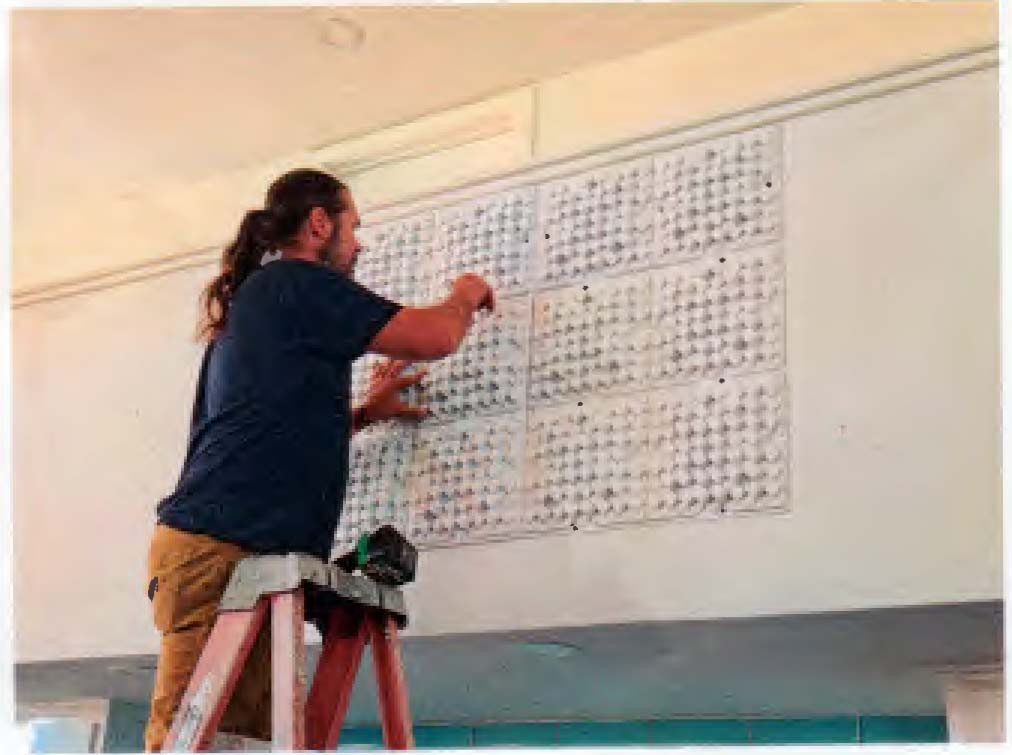
- Mezzanine Face – Diffusion
- Installed a series of ArtDiffusor® Model F diffusors
- Arranged in a continuous matrix across the mezzanine face
- Positioned against existing molding for a clean, intentional look
- Purpose: break up reflections and reduce flutter echo without deadening the space
- Rear Wall – Absorption
- Installed Tone Tiles®
- Artist-painted to match the room while maintaining acoustic performance
- Purpose: reduce slap and high-frequency reflections
- Reflective Wall Treatment – Absorption + Aesthetic Matching
- Covered a large reflective wall with Sound Channels® wall fabric
- This material is acoustically absorptive, not transparent.
- Original paintings were reinstalled over the treated surface
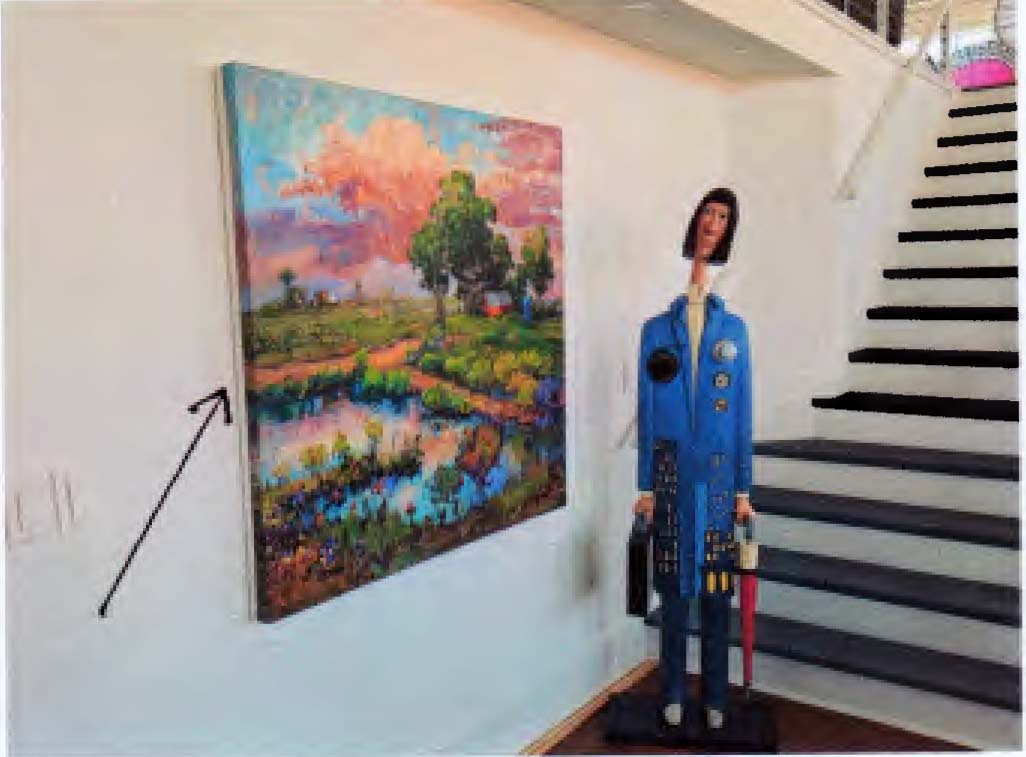
- Artwork Enhancement – Distributed Absorption
- Added Sonora® panels (1-inch thick) behind existing canvas artwork
- Turned each piece into a functional absorber
- Created slight diaphragm damping effect due to the air gap behind canvases
- Maintained full visual integrity of the collection
- Window Treatment – Removable Absorption
- Installed custom-fit Sonora® panels within window frames
- Panels secured with minimal hardware and used only during performances
- Addressed reflections from large glass surfaces near the stage
Results: Balanced Acoustics Without Visual Compromise
Post-treatment measurements showed clear improvement:
- Reverberation reduced to:
- ~2.1 seconds at 500 Hz
- ~3.4 seconds at 1 kHz
- Reduced flutter echo and slap-back reflections
- More controlled and even frequency response
Performance Outcome: Proven in Practice
The ultimate validation came during the following year’s festival:
- The returning headline performer commented on how good the room sounded
- Performers were able to clearly hear themselves on stage
- Audience members and owners noted significantly improved clarity and warmth
Conclusion
The New Harmony project highlights how thoughtful acoustic design can coexist with architectural and artistic priorities. By using targeted solutions like ArtDiffusor® Model F Diffusors, Tone Tiles®, Sound Channels®, and Sonora® panels, John Gardner successfully transformed a challenging space into an acoustically balanced performance environment—without compromising its character.


You must be logged in to post a comment.