Archive for category Sound proofing
DIY: How to quiet down that noisy equipment rack
Posted by Acoustics First in Absorption, Auditorium, Broadcast Facilities, Data Centers, DIY, Government, Home Entertainment, Home Theater, HOW TO, Media Room, Music Rehearsal Spaces, Music Tracking Room, Product Applications, Recording Facilities, Recording Studio, Sound proofing, Studio Control Room, Vocal Booth on May 2, 2013
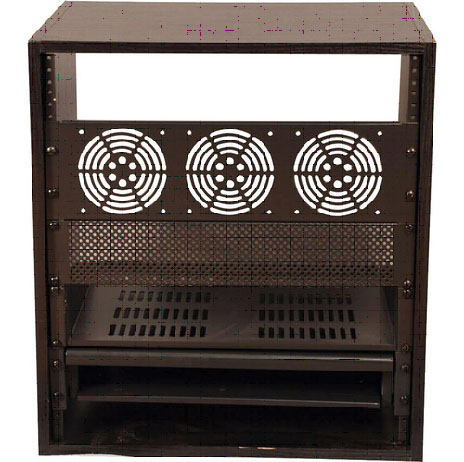 DIY Project – Rack issues
Take a few seconds and DIY fix some of the common problems with using equipment racks!
Not too many people think about their equipment racks, but many of us use them. Usually it’s something like what you see to the right – the great, sturdy, utilitarian box. Unfortunately, there are a couple inherent problems with these:
- Ringing – The metal resonates causing a ringing effect – may be masked by program material.
- Reflections – many times your rack is near sound sources causing reflections off the hard surfaces.
- Noise – Fans and other devices in the rack can make noises that are disruptive to recording.
Here are a few DIY fixes for these common problems.
- Composite foam with adhesive backing is perfect for stopping the ringing of filler panels.
- FireFlex™ acoustical foam the inside of your rack to keep the noise down.
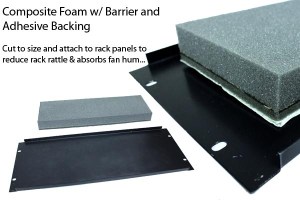

- Use some Composite Foam to line your trays, drawers and shelves to keep items from rattling around inside the case.
- Cover your rack in Sound Channels® fabric to keep the case from causing harsh reflections.
- Make a temporary cover for the front and back with BlockAid® sound barrier with minimal ventilation cut-outs to use during takes if rack-borne noise is problematic.
This simple DIY project is provided as a way for our customers to learn better ways to use our products and get more value out of the products they buy. If you are looking for more ways to use the products you have, look to Acoustics First for Ideas. http://www.acousticsfirst.com
————————————————————————————————————————————————————————————
Acoustics First Corporation supplies acoustical panels and soundproofing materials to control sound and eliminate noise in commercial, residential, government, and institutional applications worldwide. Products include the patented Art Diffusor®, sound absorbers, noise barriers, acoustical fabrics and accessories. Acoustics First® products are sold for O.E.M applications, direct, and through dealers. For more information on acoustical materials and their application, please visit www.AcousticsFirst.com or call Toll Free 1-888-765-2900 (US & Canada).
Acoustics First releases video on Vibration Isolation
Posted by Acoustics First in HOW TO, Press Release, Product Applications, Sound proofing, Video on February 1, 2013
 Acoustics First has conjured up yet another video demonstration. As the fourth in a series designed to help explain common acoustic principles, this video briefly reveals what is necessary to provide vibration isolation.
Vibration isolation can quickly prove to be obtuse and relatively difficult to understand. Common problems like footfall from upstairs neighbors, industrial noise from machinery and HVAC equipment or isolating speakers and scientific devices can require completely different approaches. Most often, an on site assessment should be completed by a qualified engineering professional to determine an appropriate acoustic solution. In many cases the solution will require a modification to the structure and implement more than a single strategy.
This simple vibration demonstration challenges to provide a basic understanding of how acoustical materials may be used to prevent the spread of mechanical noise and vibration through existing structures like walls, floors and ceilings.
In this acoustic demonstration, a surface mounted piezo transducer connected to an analog meter will register levels of sound vibrations transmitted to the table. A vibrating device placed directly on the surface will transmit sound vibrations and resonate loudly throughout the table. These vibrations will register on the analog meter. By inserting isolation materials between the device and the surface, the mechanical sound transmission is reduced and sound no longer registers on the meter.
VIBRATION ISOLATION DEMONSTRATION: Controlling Mechanical Sound Transmission
CLICK HERE FOR MORE ON: VIBRATION CONTROL PRODUCTS
 Acoustics First BLOG
You must be logged in to post a comment.