Posts Tagged art diffusor
Similar, Yet Different: Model C vs. Model D!
Posted by Acoustics First in Diffusion, Home Entertainment, Home Theater, Media Room, Multipurpose Rooms, Music Rehearsal Spaces, Music Tracking Room, Product Applications, Products, Recording Facilities, Recording Studio, Studio Control Room, Theater on January 5, 2024
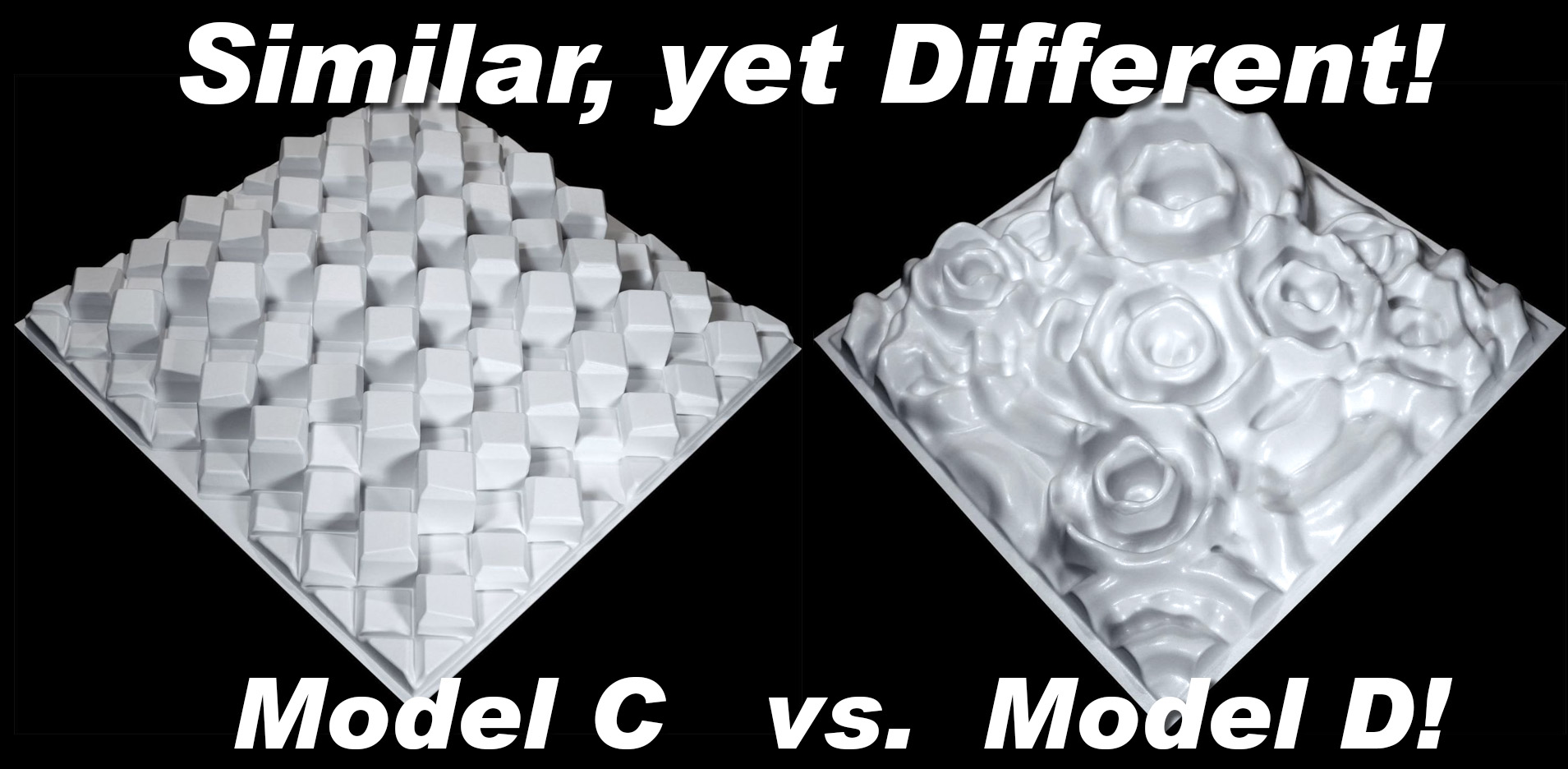
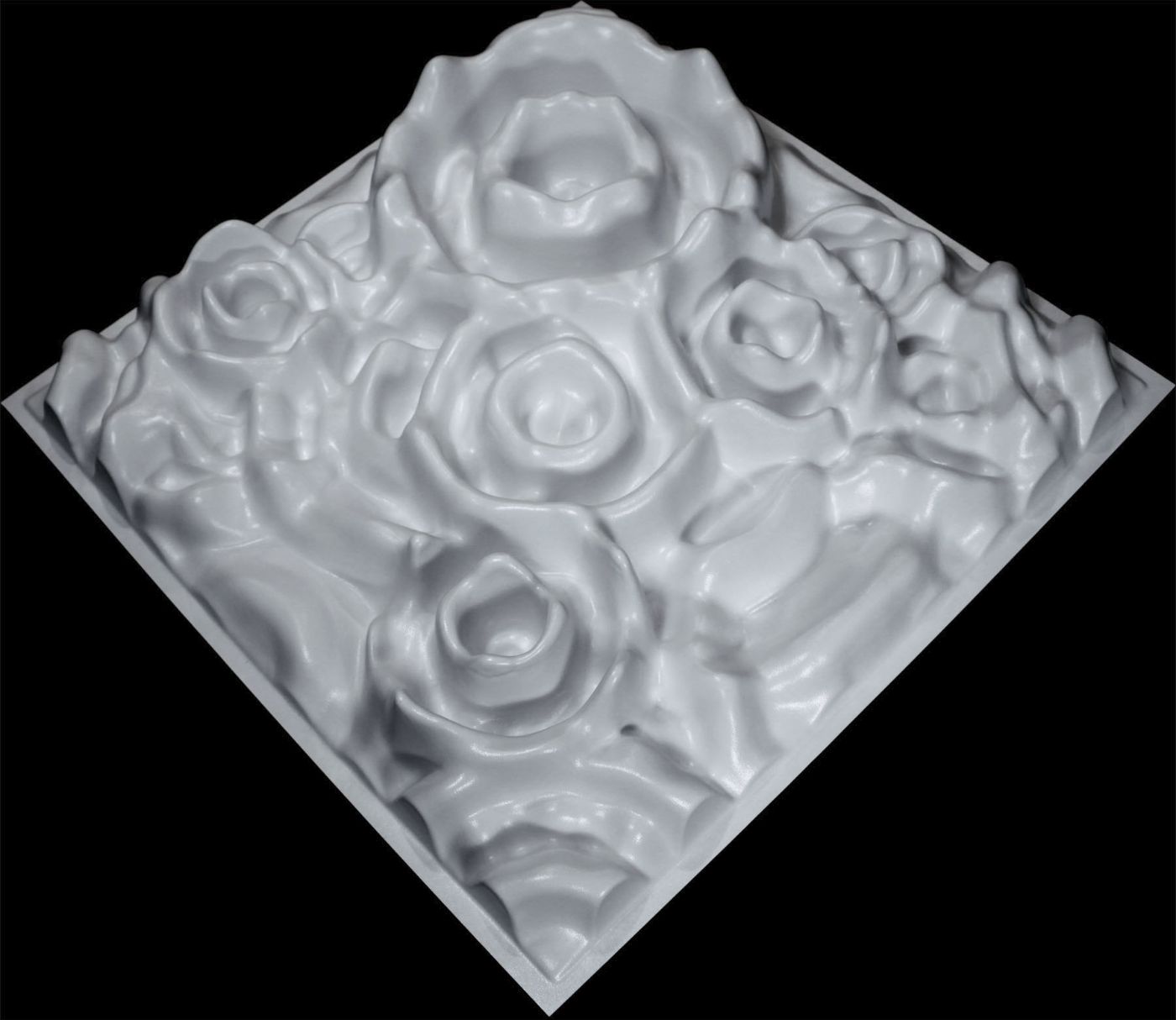
In this installment of “Similar, Yet Different,” we take a good look at two very different looking diffusers in the 2’x2′ size… the classic ArtDiffusor® Model C and the organic, rippled ArtDiffusor® Model D – while there are some similarities, there are some key differences in how they look (obviously) and how they perform.
Quick Similarities.
The ArtDiffusor® Model C and Model D are both 2’x2′ diffusers which are made to be either wall mounted or installed in a standard drop-tile ceiling grid. They are both formed from a Class A fire-rated polymer in a single piece. Both are mathematical diffusers, which create their different physical features in a “form follows function” methodology. They also cover roughly the same frequency bands, with some minor variation in how they execute their control.
Difference in Math
The Model C is an interesting configuration. Often you will see quadratic residue diffusers with flat blocks or wells in a relatively standard quadratic cell formula configuration. The Model C runs in a much different alternating binary configuration. The basic idea is that cells are placed in a 45° array with each cell adjacency calculated as an alternating array of higher and lower cells starting in the middle and working in a pattern of alternating low/high cell clusters decreasing toward the edges of the diffuser. These diffusers also do not have flat tops on the blocks – they are angled at 10°. The orientation is then rotated in 90° steps in a pattern that maximizes the spatial redistribution of reflected sound. This was a vast design departure over the original quadratic design, and created a diffusion profile that was distinctly different.

The Model D was an even greater departure. It began with a Maximum Length Sequence (MLS) concept that first changed the varied straight channels into rings of different dimensions. These rings then broke from the MLS mold by getting varied height profiles based on the QRD sequence. As if having different size rings at different heights wasn’t enough… the randomness was further perpetuated through a Boolean process of assigning certain rings a random property that would either add or subtract height from any other ring that they crossed. Finally, the entire surface geometry was smoothed using a bicubic interpolation, creating the organic undulating surface which gracefully spans the entire profile.
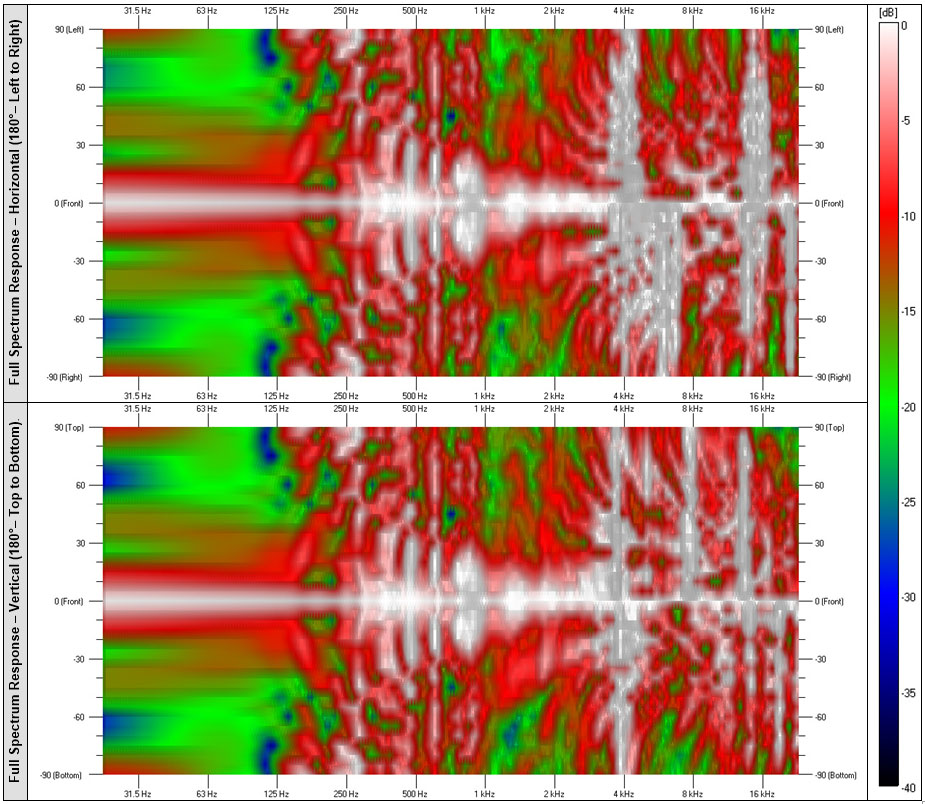
What this difference in math does to the acoustic performance.
The Model C has a nice even diffusion profile through it’s primary working range. This is a product of the QRD design and binary distribution. The set size for the blocks guarantees a solid primary frequency range from about 1KHz to over 4Khz. This tunes the Model C squarely in the most sensitive bands of the human hearing range. Below this range the device becomes a bit of an absorber. Above this range and the performance becomes more effective at intervals, which can be seen in the areas of wide diffusion at 6KHz – 18 KHz. These repeating zones are common in “stepped” quadratic designs. Due to the heights of the well being at specific intervals, the intervals repeat at octaves of their effective bands.

The Model D doesn’t have the same stepping. The spline interpolation and the random Boolean shifts smooth the transition from one quadratic height to the next, and the MLS sequence causes a bit of a high-pass filter pushing the start of the primary range to around 2KHz – which is a little higher than the Model C. The main difference is that once the Model D starts it’s range it diffuses everything up to and over 20KHz without the banding that can happen in other quadratic designs.
Another difference in symmetry.
The ArtDiffusor® Model C is a fairly symmetric design, but it’s 45° angle pushes that symmetry along the diagonal (corner to corner) across the unit. The asymmetry is subtle but allows for enough variation to account for any “lobing” issues that can occur in more simple geometric devices The 10° block faces being at varied orientations is key to increasing the spatial directivity over the older “flat-faced” Quadratics. This was a very novel design when it was first introduced, and those benefits are crucial to the longevity of the Model C’s reign – It just works. It’s predictable and musical… and that’s why it’s here to stay!
The ArtDiffusor® Model D is a completely different animal from the Model C when it comes to symmetry… as a matter of fact… there isn’t really much on it that is symmetric! The Model D was designed as a departure from symmetry. Focusing on the mid to high frequencies, which are very specular, the organic geometry creates an asymmetric reflection pattern. This pattern can be used to steer the sound into a wider field.. and that profile changes with the wavelength of the sound that hits it. This steering ability and the wide frequency range has made the Model D a favorite in mixing and mastering environments, where they can get smooth performance through the entire frequency spectrum.
How these differences benefit everyone.
We have stated before that there isn’t really a one-size-fits-all solution in acoustics. Many environments will use various treatments to achieve their desired goals. You will often have different devices to address different problems, in different frequencies, in different locations, in the same space. Bass traps for controlling the lows. Absorption to reduce gross energy across the board. Large geometric surfaces to break up parallel reflections and steer the projection of sources. Mid range diffusers to create clarity to the sources and reduce artifacts. High frequency diffusers to reduce flutter and add a feeling of envelopment and airiness in the space. These devices all have their place – from the smaller listening rooms, to critical listening environments, and large multifunction spaces and venues.
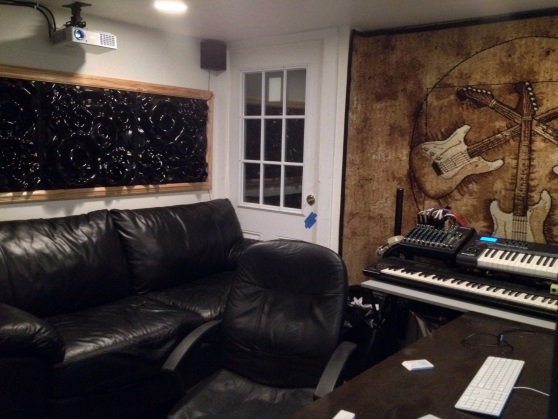
It is also worth noting that these two devices have a very different aesthetic visually. The classic blocks of the Model C have become a signature look for quality sound environments, and people recognize them as they would classic geometric pyramids and barrels. The Model D aesthetic provides a visual accent that people take advantage of to set their space apart from others. The undulating, asymmetric pattern changes drastically when you rotate the individual units in the array. This allows for not only varied acoustic performance, but also a unique visual possibilities – with numerous variations.

The ArtDiffusor® Model C and Model D are two tools that are used to craft ideal listening environments around the world… and in those roles they are indeed Similar, Yet Different.
ArtDiffusor® Model C vs. Aeolian®: Similar, yet different.
Posted by Acoustics First in Diffusion, Product Applications, Products, Uncategorized on September 24, 2020

For this installment of “Similar, yet different” we look at The ArtDiffuser® Model C and the Aeolian® Sound Diffuser.
While these two diffusers look very different, there are a fair amount of similarities between them. Their physical size and depth allow them both to be great mid-frequency diffusers, but did you know that the Aeolian® started life as a blocky-looking diffuser – just like the Model C? It’s true!

ArtDiffusor® Model C array on a hanging bass trap.
The mathematics behind the two diffusers is similar, but the implementation is different. While the Model C retains its “blocky” appearance, the Aeolian has run through a mathematical process called “bicubic interpolation.” Without turning this into a math-heavy post, if you take a “blocky” design like the Model C and run its geometry through bicubic interpolation, you get a “curvy” surface like the Aeolian® – It “smooths” the transition from one block to the next in a 3 dimensional matrix.
While they did not begin as identical geometries, they were similar in their height ratios – with the Aeolian® starting with fewer blocks in a more random distribution, and a slightly taller maximum height. They both effect similar frequency ranges, with the Aeolian® going slightly lower and higher due to its depth and interpolated surface. The pattern and type of the diffusion is also different because of the different geometries – the Model C has blocks, and the edges of those blocks introduce a great deal of edge “diffraction” – which is what happens when a wave interacts with an edge, or corner, of a surface. It bends and shears around the edge, which helps break up the continuity of the waveform, where the Aeolian® takes the approach of redirecting most of the energy off a randomized and continually-curved surface.

Aeolian® Diffuser array on the back wall of Big3 Studios.
It is important to note that the two are similar, yet different in their absorption numbers as well. With the Aeolian® being deeper with a single large cavity, it provides a bit more absorption in the low frequencies than the Model C, which is a more rigid geometry containing smaller elements. Depending on the space, this may be a useful addition to the diffusive properties. While some spaces need the extra absorption, some are pretty well balanced already and are just looking to “sweeten” the sound a bit.
On the surface, they are both a nominal 2’x2′ square of thermoformed Class A plastic with lightly textured surface. That is the extent of the visual similarities, and we cannot hide the aesthetic differences between the two devices. The ArtDiffusor® Model C is a “classic” diffuser. Many have been looking at these for the better part of 3 decades now. It’s a classic design at this point with no need for introduction – it is what the quintessential diffuser “looks” like. In fact, when many people think of a diffuser – the Model C is what they visualize! The Aeolian® is a modern rendition of the classic design. Using modern calculation techniques, we can now present the type of diffusion the Model C is famous for, in a different way.
While the two geometries look entirely different, and perform a bit differently, they have a common heritage as mathematical, 2-dimensional diffusers. You could say that the Model C is the grandparent of the Aeolian®, and that pedigree has been passed on – having a similar foundation, but a different final interpretation.
ArtDiffusor® Model C and Model F – Similar, yet different.
Posted by Acoustics First in Diffusion, Media Room, Music Tracking Room, Product Applications, Recording Facilities, Recording Studio, Studio Control Room, Theater, Uncategorized, Vocal Booth, Voice Over on August 20, 2020

We often get asked about the functionality of the different diffusers, and one of the frequently asked questions is about the differences between the ArtDiffusor® Model C and ArtDiffusor® Model F. We will cover some of similarities and differences in the design, functionality and use of these two devices.
Design.
The Model C and Model F use identical math to come up with their basic structure, they even have angled faces – the main difference between the two is that the Model F elements are ½ of the Model C’s height, length and width – and then it is duplicated 4 times in the same footprint… The Model C is nominally 2’ x 2’ x 4” deep. The Model F is four quadrants that are nominally 1’ x 1’ x 2” deep – like little scaled down Model C’s… This makes them visually similar and aesthetically compatible. This low profile design makes the Model F more desirable for ceiling installs in spaces with very limited headroom – like basement studios that have low ceilings.
Performance
Due to the different size of the elements on the two devices, they have very different frequencies at which they are most effective. The Model C is a mid-frequency diffuser by design… having larger elements and deeper wells than the Model F. The Model F is primarily a high-frequency diffuser, due to the small elements and lower profile. Both diffusers are tuned to different frequencies as their “primary range,” and while they do affect lower and higher frequencies than they are designed for – it is to a lesser degree, or the product of absorption.
What does this mean?
The Model C has a primary design range of 1KHz to 4KHz. This is where it is primarily designed to work. It can and does diffuse below 1KHz and over 4KHz – just to a lesser degree than its primary design range.
The Model F has a primary design range of 2KHz to 8KHz, and again, it does diffuse outside of that range, but to a lesser degree.
The angled caps of both the Model C and Model F help to extend their high frequency range by reflecting sound in different directions at higher frequencies – causing the sound to scatter spatially. The different heights of the elements cause sound reflections to be offset “temporally,” or in time. The sound that hits the higher elements is reflected sooner than the sound that hits the lower elements – travelling further before it is reflected. This time offset, changes the “Phase Coherency” of the reflection; the larger the difference in the heights, the greater the offset in time.
The size of the elements matters as well. The shorter wavelengths of high frequencies can diffract and scatter off of the smaller elements of the Model F more readily than low frequencies, which see the Model F as a slightly angled & mostly flat surface. However, the lower frequencies are more affected by the larger and deeper elements of the Model C.
How do these differences help define their use?
The Model C is a great all around diffuser – it covers a wide range of frequencies, throws a very predictable 2D diffusion pattern, and it is tuned to a very musical range.
The Model F is a great high-frequency diffuser. It targets a few very specific, yet important issues. High frequencies are responsible for some nasty problems in rooms. Flutter echoes, ringing, comb filtering, and other artifacts are particularly noticeable in higher frequencies. If your room is otherwise performing well acoustically, the Model F can help tackle that last hurdle to make a good room into a great room.

Many critical listening environments use both the Model C and Model F to tune the diffusion in their space.

While the white Aeolians® on the back wall are the visual focal-point on in Big3 Studio A, look closely at the ceiling and you will notice a large array of black Model C’s and Model F’s. These help to intermix the diffusion of different frequencies in the large control room.
Due to their aesthetic and functional compatibility, many rooms benefit from using both. Model C’s addressing the bulk of the Mid-range diffusion, and the Model F smoothing out the top end.
I hope that this highlights the unique properties of both the ArtDiffusor® Model C & ArtDiffusor® Model F – and helps to demystify their function and use in your space.
Big3 Studios – Aeolian® Diffusers
Posted by Acoustics First in Diffusion, Product Applications, Products, Recording Facilities, Studio Control Room, Uncategorized on August 17, 2018

Aeolian® Diffusers in Big3 Studios
We recently received these wonderful installation pics from our friends at Big3 Studios in Florida. They redid the back wall in one of their control rooms using our Aeolian® Sound Diffusers. In a couple of the pics you can also see our Model C & Model F Art Diffusors® (black) in the ceiling!

Binaural Bob Returns!
Posted by Acoustics First in Absorption, Diffusion, Offices, Product Applications, Products, Uncategorized, Video on April 5, 2018
Back in the summer of 2015 we had a good time stuffing a bunch of our Model D Art Diffusors® into an empty storage closet and making a bunch of racket. The results were recorded, with the help of our friend Binaural Bob and the resulting data provided some interesting insights.

Well, Binaural Bob is back! This time we had a larger room than before (10’x9’x8’), and experimented with wider variety of sounds and treatment options. While this is obviously not the same as a controlled laboratory test, it does have a certain ‘real world’ flavor that’s relatable.
For best results, turn off any compression/effects and listen on headphones.
Reference Sounds played through speaker
Ye Olde Balloon Pop Test! (Calibrated 12″ Shiny Red Latex Party Balloons!)
WARNING! BALLOONS ARE LOUD – TURN IT DOWN!
 Acoustics First BLOG
You must be logged in to post a comment.