Posts Tagged aeolian
Acoustics First® releases new 3D Model Repository.
Posted by Acoustics First in Press Release, Products on February 25, 2026
For those users who like to design visually, Acoustics First® has released a new 3D model repository at:
https://acousticsfirst.com/acousticsfirst-3d-model.htm

Currently, the 3D models are available in .SKP and .GLB format for:
More models are coming soon. The repository is available at https://acousticsfirst.com/acousticsfirst-3d-model.htm or it is linked from any of the diffuser pages listed above.
End-of-Year Warehouse SALE 2025!
Posted by Acoustics First in Absorption, Diffusion, Press Release, Products on December 23, 2025
It’s that time again! Time to do The End-of-Year cleanout of overstock, B-Stock, etc! Help us clean house!
Free Ground Shipping to the lower 48 states included on warehouse sale items – Available until January 31st… or while supplies last!
Aeolian™ Sound Diffusers – B-Stock

These Aeolian™ Diffusers have minor imperfections due to the batch of plastic having small orange specs in it. Barely noticeable, and easily paintable.
Quantity at time of writing – 102
Original Price $175 per unit – Sale price $87.50 per unit!
ArtDiffusor® Model D Sound Diffusers – Overstock
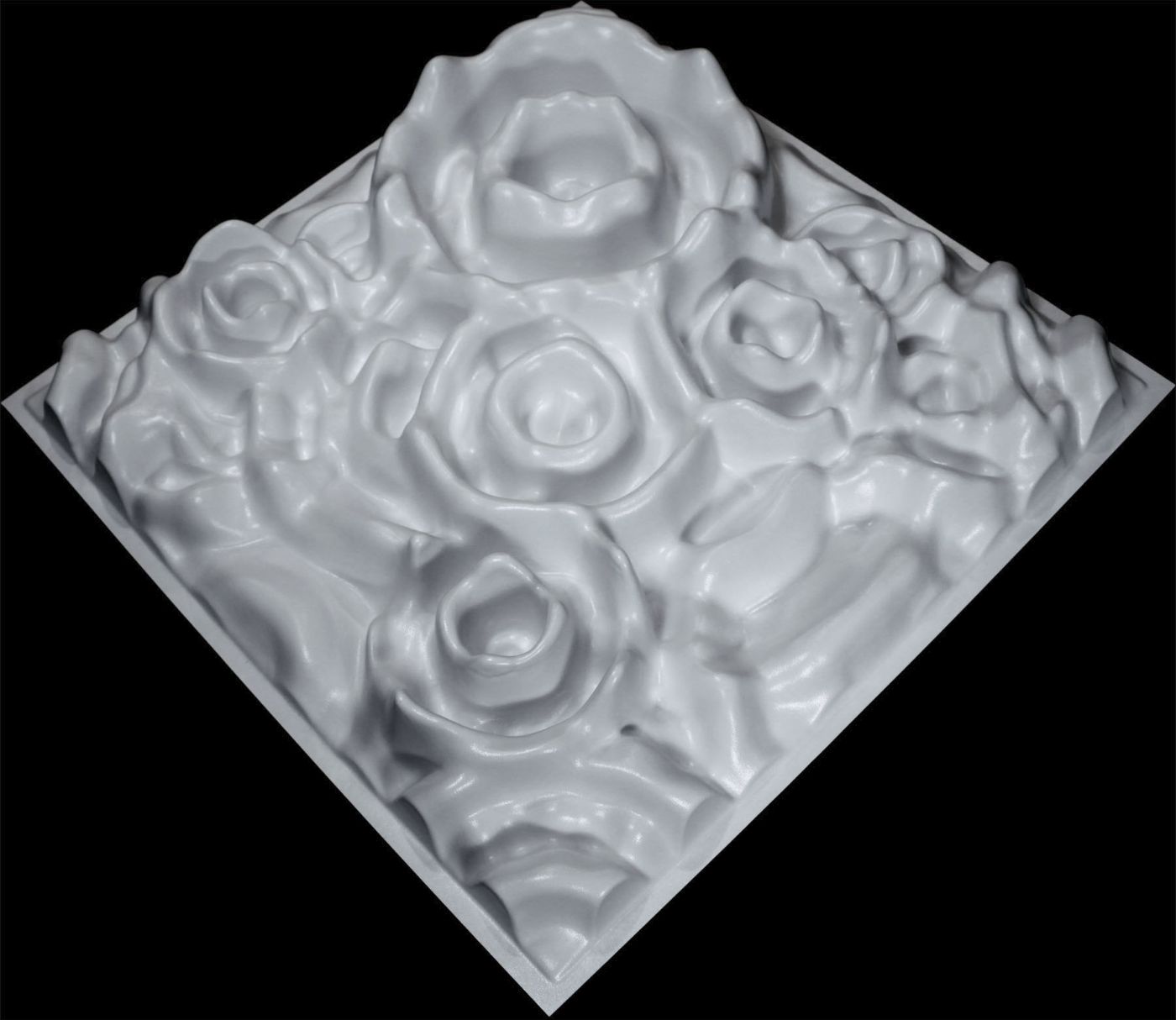
These ArtDiffusor® Model D Diffusers are A-Grade Stock – they are simply overstock items!
Quantity at time of writing – 96
Original Price $175 per unit – Sale price $87.50 per unit!
2’x2’x1″ Tone Tiles – Overstock

These 2’x2’x1″ ToneTiles are A-Grade Stock – they are simply overstock items!
Quantity at time of writing – 60
Original Price $70 per unit – Sale price $35.00 per unit!
2’x2′ Cloudscape Ceiling Tiles – Tile Backed – Customer Return

These Cloudscape Ceiling Tiles with Fog Pattern are a customer return – Listed as B-Stock. They are mounted to a ceiling tile backer for use in a drop ceiling grid.
Quantity at time of writing – 66
Original Price $60 per unit – Sale price $30.00 per unit!
Contact Acoustics First today at 888-765-2900 or reach out to info@acousticsfirst.com to inquire about these deals – but don’t wait… once they are gone, that’s it!
Eight very different 2′ x 2′ sound diffusers.
Posted by Acoustics First in Diffusion, Product Applications, Products, Recording Facilities on June 30, 2025
Acoustics First® has maximized the idea of adaptable designs. One of the most common modular architectural elements is the 2′ x 2′ ceiling grid. While standard, fiber ceiling tiles have their uses, specialized acoustic environments require higher-performing materials – for both absorption and diffusion. While Acoustics First® excels with its Sonora® and Cloudscape® Ceiling tiles, today we are going to focus on the wide range of 2’x 2′ diffusers that have been developed over the several decades.
Sound diffusers in a 2′ x 2′ format have several advantages, other than just being placed in a ceiling grid to help diffuse the ceiling. They integrate well on walls and in arrays, where they can help break up large flat surfaces and help minimize flutter and standing waves from parallel surfaces. While they provide many different aesthetic options, there are also many different functional types of diffusers available in this form-factor to address different acoustic issues, from flutter, bass issues, targeted frequency absorption, and geometric scattering. Let’s look at some of these devices and their uses.
Geometric Diffusers.
Geometric diffusers have been around a long time. These devices break up large flat surfaces and redirect or “scatter” those reflections in different directions. They work great in environments where you need to redirect acoustic energy in a predictable way, and redistribute a specular reflection over a wider area. In a 2′ x 2′ size, you can also get a fair amount of bass absorption, due to the large cavity behind the geometric shapes creating a space that can be stuffed with absorbent material to tune it.


Quadratic/Mathematic Diffusers
Mathematic diffusers are devices that use specific calculations to design their size, shape, and structures to effect their performance. A common type is called the Quadratic Residue Diffuser (sometimes called a Schroeder Diffuser, after its pioneering inventor, Manfred Schroeder). This type uses a Quadratic Residue Sequence that optimizes uniform sound diffusion at specific design frequencies. There are different ways to implement these designs, but two common designations are based on their diffusion patters – 1D or 2D. A 1D Quadratic diffuser mostly spreads energy in one plane, and a 2D provides a hemispheric pattern.
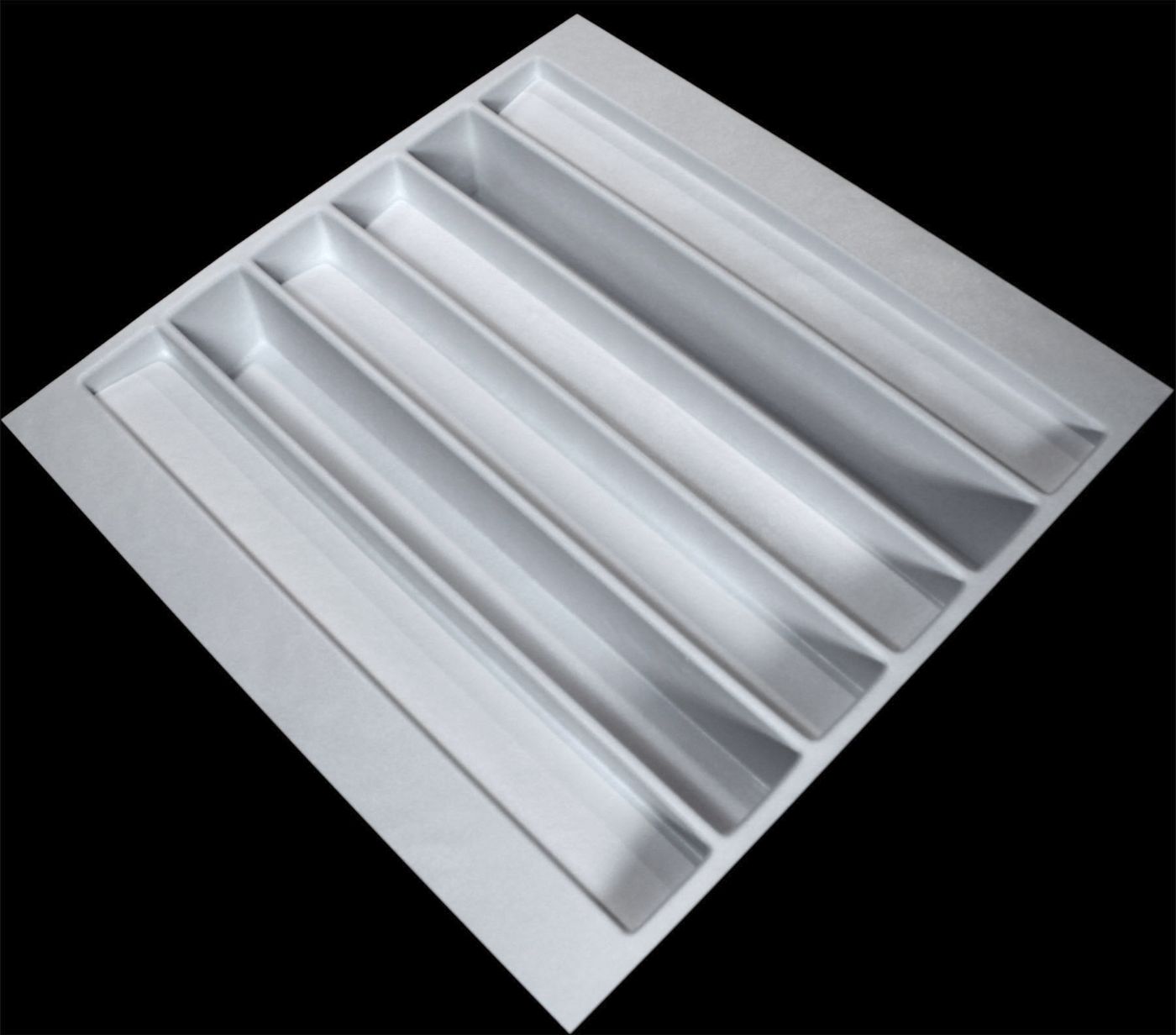


Organic Diffusers.
Organic diffusers are a variation on the classic mathematic diffusers which use different mathematic functions to optimize the diffusion further by creating a smooth transition. Once such method is called Bicubic Interpolation. Instead of having the math restricted to having blocks at certain heights, the interpolation bridges these heights using a function that provides a smooth transition to the next target height. This transition creates unlimited resolution in the frequencies within it’s functional range, providing expanded uniformity throughout its range, and increasing its capabilities. As different frequencies are affected differently depending on their wavelength – the organic diffusers have no hard edges to define their pattern and look differently to different frequencies and energy from varied sources.
These diffusers all have the ability to be used in different types of installations for different reasons. Many of these diffusers are mixed and matched in the same room. You will see these on the walls or ceiling, and placed in different locations. There are rooms with Double-Duty diffusers for low frequency control, Model C for Mids, and Model F for flutter, while other rooms may have Aeolians™ on the rear wall and Model C’s and Model F’s to control the ceiling.

Keep in mind, these aren’t even all the diffusers we have available, these are just the ones specific to the 2′ x 2′ format. The Aeolian™ has a 1′ x 1′ version called the Aeolian™ Mini. There are flat panel diffusers that are hybrid absorbers and diffuser like the HiPer Panel® and the HiPer Panel® Impact. There are even large format versions of the Double Duty™ diffuser, Pyramidal, and even the Quadratic Diffuser.
For more info about these diffusers, read some of our, “Similar, Yet Different Series,” where we go into more detail about our products… and how some of these are similar, yet different!”
If you have any questions as to which products you need to optimize your space, reach out to Acoustics First® and we can help you find which products will be best for your application. Remember that Acoustics First’s® full line of sound diffusers are all made in the USA, with many available in stock for quick shipping.
Similar, Yet Different: Aeolian® vs. MiniAeolian™
Posted by Acoustics First in Broadcast Facilities, Home Entertainment, Home Theater, Media Room, Multipurpose Rooms, Music Rehearsal Spaces, Music Tracking Room, Product Applications, Products, Recording Facilities, Recording Studio, Studio Control Room, Uncategorized, Vocal Booth, Worship Facilities on September 28, 2023
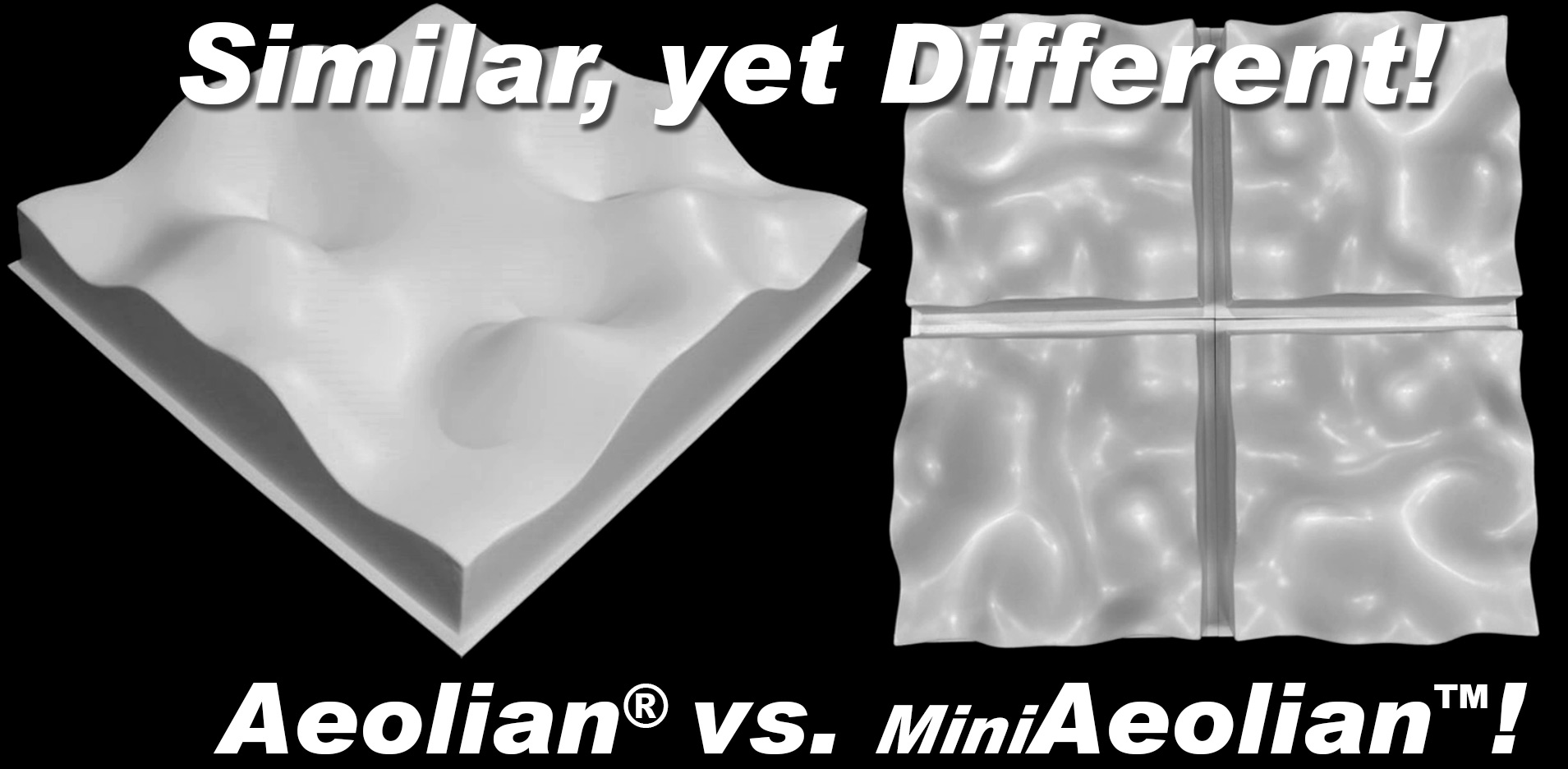
In this installment of “Similar, Yet Different”, we are going to compare the two current variations of the popular Aeolian® Diffuser – the original 2’x2′ Aeolian and the 1’x1′ MiniAeolian™!
Design
This comparison has some similarities to the very first “Similar, Yet Different” post we made comparing the ArtDiffusor® Model C to the ArtDiffusor® Model F. We are looking at a diffuser that uses identical mathematic functions to create the shape… both the Aeolian® and the MiniAeolian™ are an “Organic Quadratic” constructed from a Bicubic Interpolation of a Quadratic Residue Function. They are both truncated so that they are completely asymmetric, even to the edge. The MiniAeolian™ IS an Aeolian®, only it is scaled differently.
You may recall that the Model F was constructed of 4 scaled down Model C diffusers in a monolithic 2’x2′ tile – This is not the case with the MiniAeolian™. The Original Aeolian® Diffuser is a 2’x2′ footprint that is 5″ tall, and will fit in a standard 2’x2′ ceiling grid. The MiniAeolian™ is a single scaled down unit, and it is a little different – The 1’x1′ footprint stands alone as a single unit, but it is only scaled down in height to 4″.
In this case, form follows function. The MiniAeolian™ was built to fill a specific function as a smaller wall-mount unit, or a direct-mount ceiling unit for smaller spaces. Part of this wall-mount function was to have a version of the Aeolian® that would fit in tight areas or in spaces that didn’t have enough clearance for the 5″ standard Aeolian® (or would require modification to those areas (or diffusers) to allow this extra height). Some people implement configurations that have tighter footprint requirements, and the 1’x1′ footprint of the Mini allow it to be used in these types of layouts.
Performance
So how does this change affect the performance of the unit? Surprisingly, they are quite similar. The Organic curved design, with only a 20% reduction in height, shows only minor differences in performance of their overall frequencies ranges – with both primary ranges starting at about 1500Hz-1600Hz with and average between 150° and 170° of horizontal and vertical dispersion up to between 5Khz and 7Khz. While the primary range is a good indicator, when we look at the actual polar response, we can get a better picture of their full range performance.

A quick glance shows two very similar performing diffusers, except for the low-frequency performance. The larger elements and deeper formfactor of the original Aeolian® are more effective at the 1000Hz range, where the MiniAeolian™ appears to be mostly specular. There are some surprises however. It appears that at the 2000Hz range leans slightly in the favor of using 4 MiniAeolians™ in an array verses the single Aeolian®. There is more surface variation over the same footprint (2’x2′ in the array of 4), and the size of the Mini’s features are a bit more optimal for diffusing the 2Khz wavelength. This swings back slightly into the favor of the single Aeolian® at 4Khz, where the larger elements have a wider throw, and the elements of the Mini have steeper wells. At 8Khz, it tips back to the Mini, and then at 16Khz, they are both neck-and-neck.
The amazing similarity is that the variations are quite subtle through their entire effective ranges, and even quite a bit above those ranges. While there are slight differences in the performance of the diffusers when we compare the directly, these are really very minimal except for the low-frequency edge in performance of the larger original Aeolian®.
Closing
With the similarity of performance in the two diffusers, they can almost be used interchangeably – or even used together in the same environment to implement an aesthetic vision or add more randomness/variety to the diffusion in the space.
There are several occasions where you may require one over the other.
- If you need more 1Khz diffusion, you should add some 2’x2′ Aeolians® – as they perform better in that range.
- If you need to install diffusers that fit in a ceiling grid… you will also want to use the original.
- If you want the Aeolian® but need diffusers that will fit in a space that is less than 2’x2’x5″, you may want to go with the MiniAeolian™.
Currently the MiniAeolian™ is a custom order item only, and is subject to minimum order quantities.
Contact Acoustics First® for more information and pricing.
John Bullard Live Room – Tuning a Live Room for Classical Banjo
Posted by Acoustics First in Absorption, Customer Feedback, Diffusion, HOW TO, Music Tracking Room, Product Applications, Products, Recording Facilities on May 3, 2023
When you think of classical music; what instruments come to mind? Piano? Violin? Cello? …What about Banjo?
In the summer of 2022, classical banjoist John Bullard reached out to Acoustics First for assistance with his newly renovated home-studio. John is one of a select group of classical musicians aiming to showcase the versatility of this uniquely American instrument. The banjo, with John’s expertise, lends a very distinct, melancholy sound to contemporary and traditional compositions.

Having recorded a number of albums already, John knew he wanted his live room to be catered specifically to tracking solo, classical banjo as well as small acoustic ensembles. Acoustics First analyzed John’s live room and came up with a treatment design that would achieve an “ideal-as-possible” acoustic environment for recording classical instruments.
The largely reflective live room had walls comprised of unfinished, reclaimed wood planks over plywood, a drywall ceiling, stone fireplace and a polished concrete floor. The parallel, hard surfaces contributed to a poor tracking environment; with standing waves and “flutter” echoes adding unwanted coloration to recordings, inhibiting music definition.
Spaces used for rehearsing and recording classical music often benefit from elevated levels of reverberation, which add a sense of warmth and ambience to acoustic music. Although the reverb in John’s untreated room was only slightly excessive when measured, it was far from “diffuse”, with the majority of energy coming from early reflections.
The primary challenge in the live room was to address the early specular reflections and standing waves without taking too much “life” out of the room. To achieve this delicate balance, wide band diffusion was recommended as the primary ceiling and wall treatment with selective sound absorptive treatment with fabric-wrapped Sonora® panels.

Double Duty Diffusers™ and Aeolian® sound diffusers were recommended as they would also provide some much needed low-frequency absorption in addition to broadband diffusion.
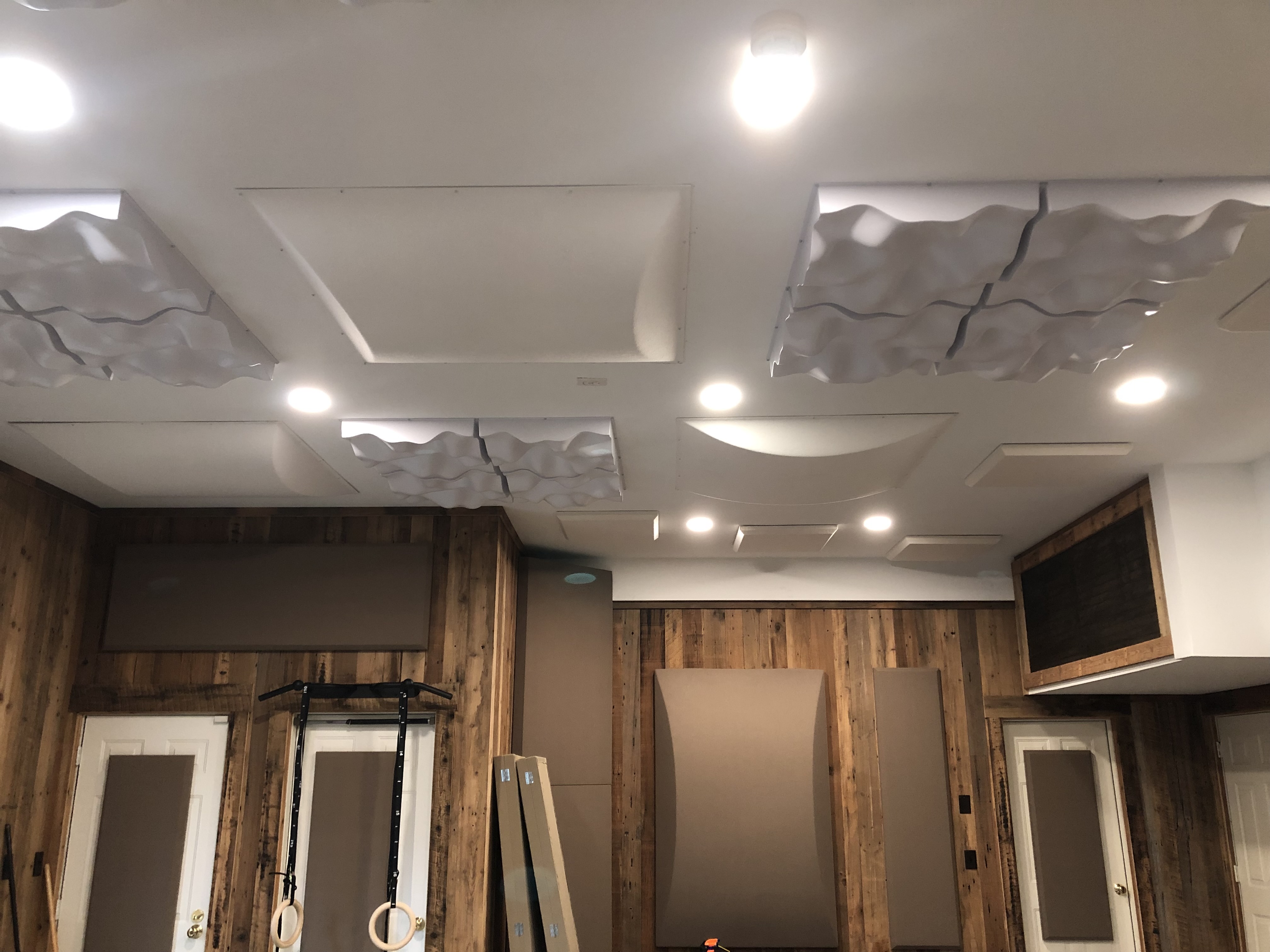
After the treatments were installed, John got right to work on experimenting…
“…ready to start doing extensive test recordings to locate the best spot and rug configuration for solo banjo… It sounds really good to my ear – now to see how the microphones hear it!”
John Bullard

Please check out John Bullard’s music!! – https://www.johnbullard.com/
 Acoustics First BLOG
You must be logged in to post a comment.