Sonora® Panel – Church Installation!
Posted by Acoustics First in Absorption, Product Applications, Products, Worship Facilities on November 21, 2017
What can you say about the tremendous benefits of acoustical panels for churches that hasn’t already been said?

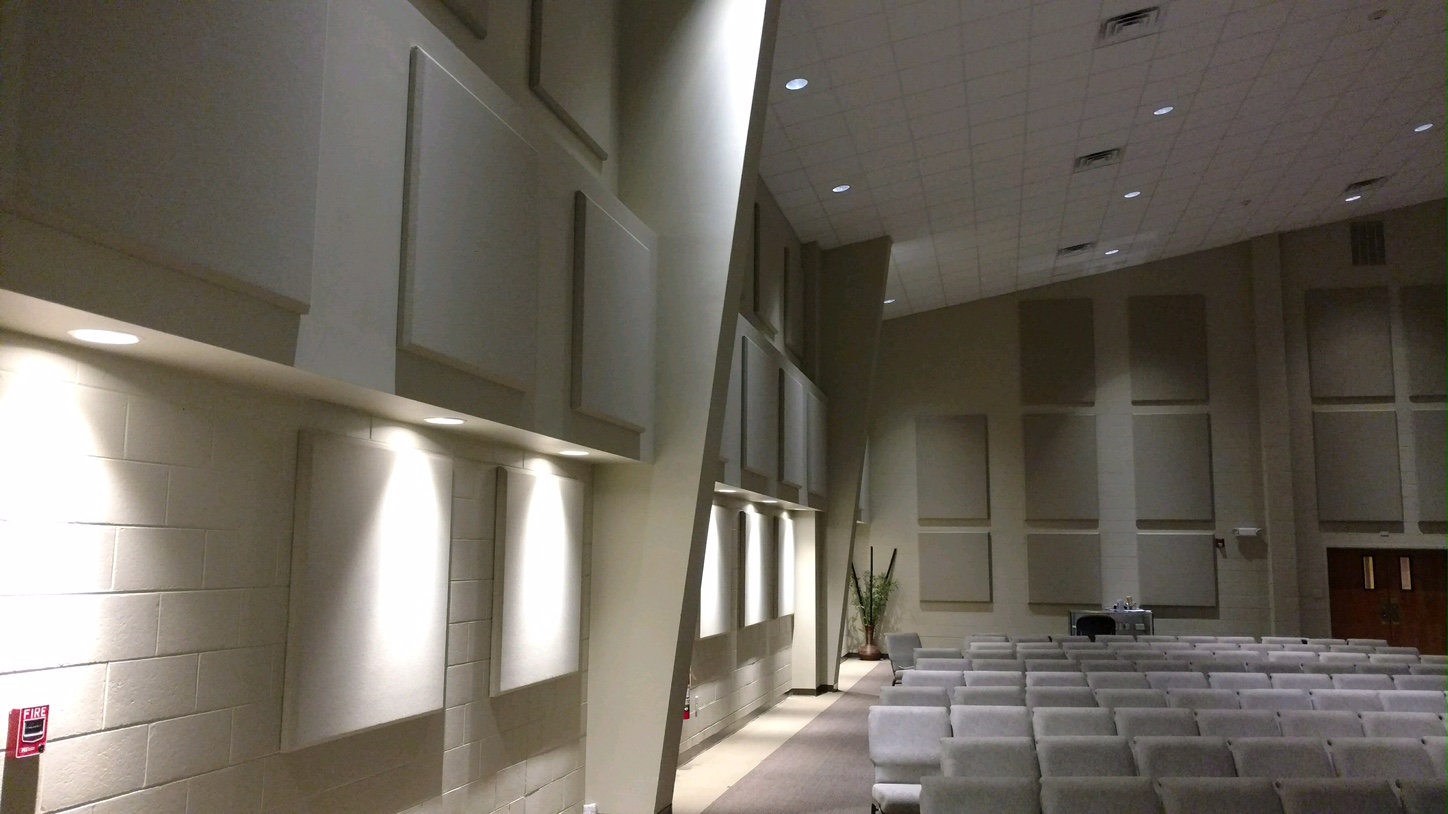
Here are a few pictures from another fantastic installation.
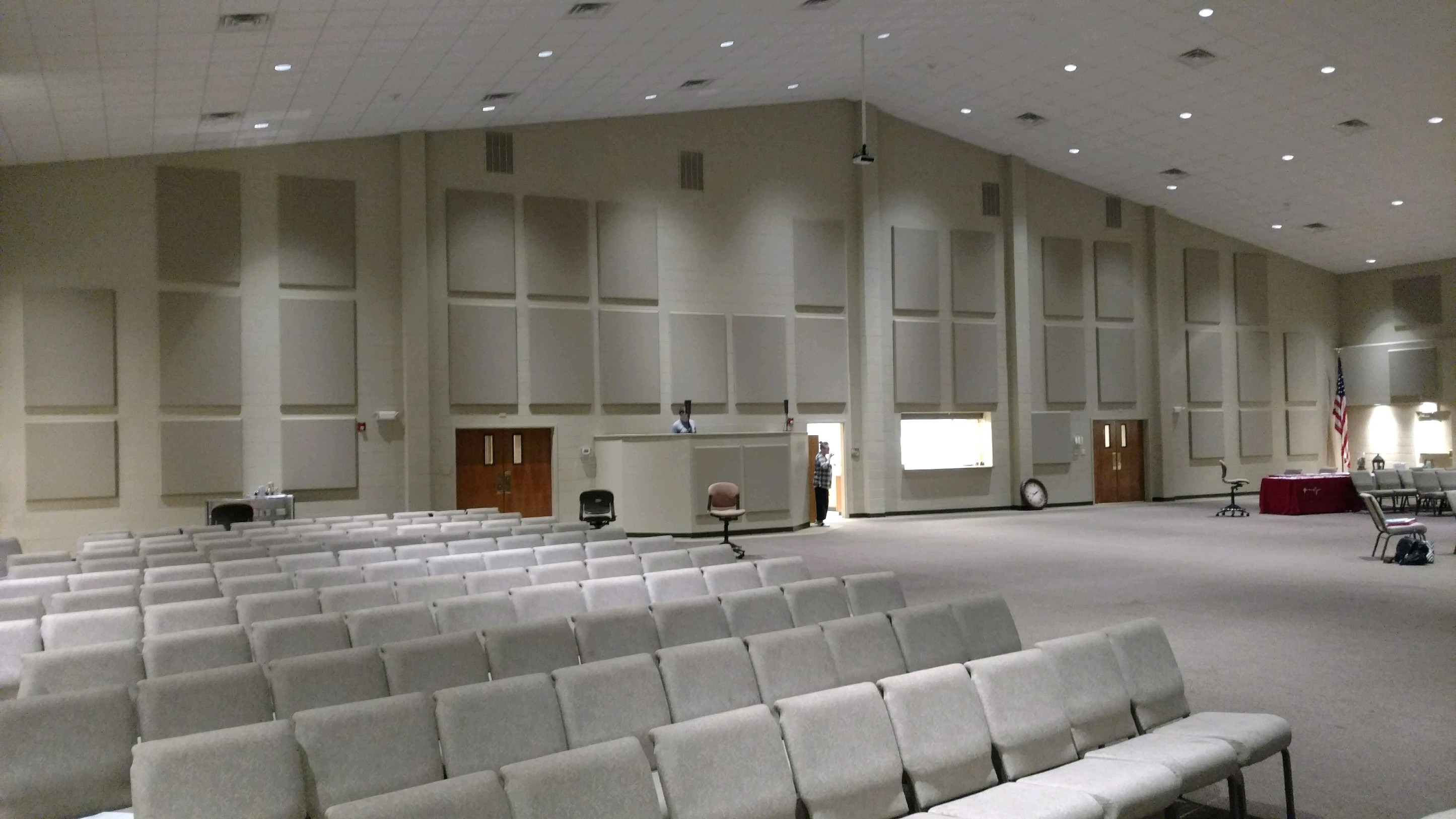
These Sonora® Wall Panels were specified by Cameron Girard in our technical sales department.
AES 2017 – Thanks from Acoustics First
Posted by Acoustics First in Articles, Company Information, Diffusion, Mentions, Press Release on October 24, 2017
Thanks to everyone who flooded our booth at the 2017 AES/NAB show last week at the Javits Convention Center in NY! We enjoyed all the enthusiasm of the attendees, and all of the conversations about projects, products, and acoustics!
If you kept your AES Dailies, you may have seen Jim and the Art Diffusor® Model D on Page 4 of the 2nd edition.
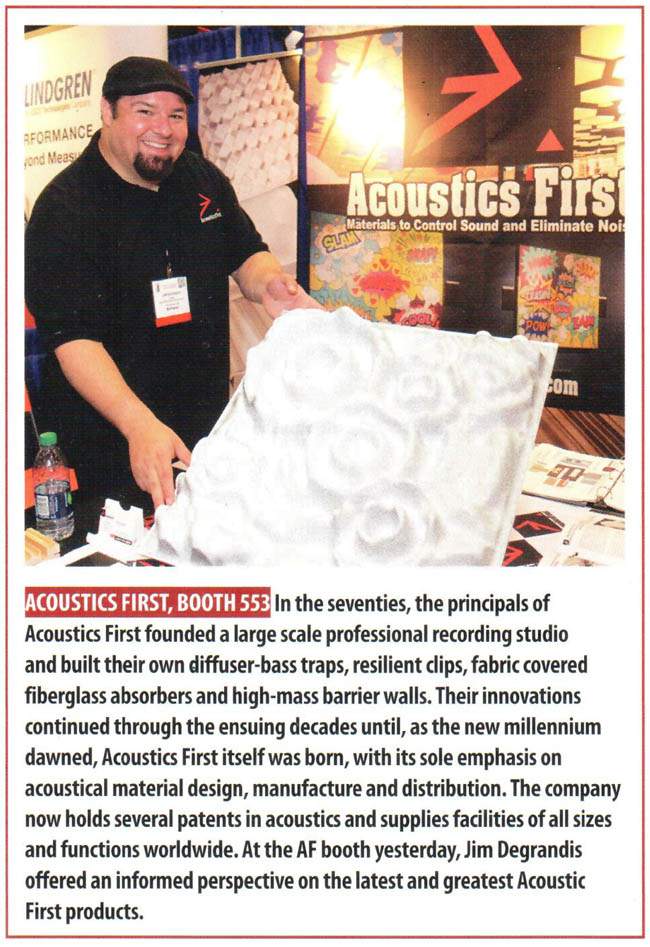
Jim DeGrandis from Acoustics First as shown on Page 4 of the AES Daily – Day 2
Thanks again!
Enjoy the spinners!
(Note: Fidget Spinners are not an acoustic device… technically)
*spin* *spin* *spin* *spin* *spin*
Acoustics First @ AES/NAB 2017 – New York
Posted by Acoustics First in Company Information, Uncategorized on September 27, 2017

Be sure to stop and see Acoustics First® at the AES/NAB at the Javitz Center in New York, October 18-20, 2017! We are booth number 553 – Next to the “Mix with the Masters” and the “Mixer – Lounge and Bar” area.
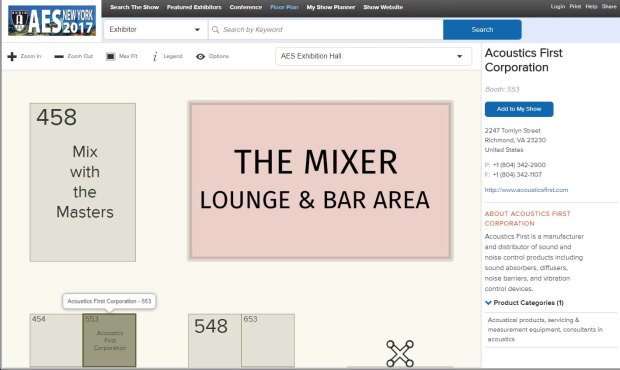
You can’t beat Autumn in New York! See you at the show!
Sound Diffusion: The Movement toward Omnipresence
Posted by Acoustics First in Uncategorized on August 17, 2017
Here’s a great article from the August 2017 Edition of audioXpress, from our own Jim DeGrandis , on acoustic diffusers and diffusion. The article gives an overview of the ‘state-of-the-industry’ as it relates to diffuser design, measurement, and practical application. Jim is a member of the Acoustical Society of America (ASA) and ASTM International.
Here is what we know, and where it’s headed.

Introducing the Aeolian™ Diffuser
Posted by Acoustics First in Diffusion, Products on July 11, 2017
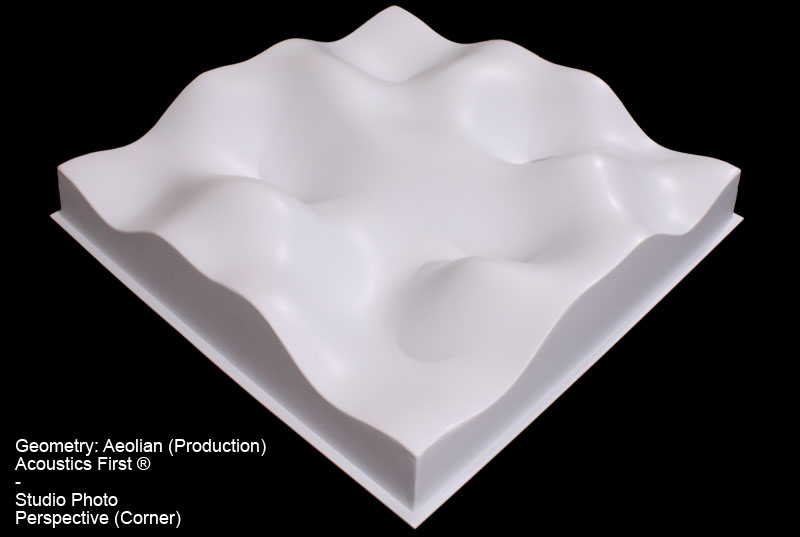
Production Unit – Photo
Acoustics First® is pleased to announce our latest creation: The Aeolian™ Sound Diffuser. In some ways a simplified version of our popular Art Diffusor® Model D, the Aeolian™ is the latest in our line of ‘Organic Quadratics’. Part of the Aeolian’s™ unique design comes from its use of “implied symmetry”. Although the edges are all asymmetric, the height variations are just subtle enough to create an illusion of symmetry when installed in a standard 15/16” grid, or spaced appropriately on a wall. The lack of a uniform edge also has added acoustical benefits in the way of “randomness”.

3D Development Model
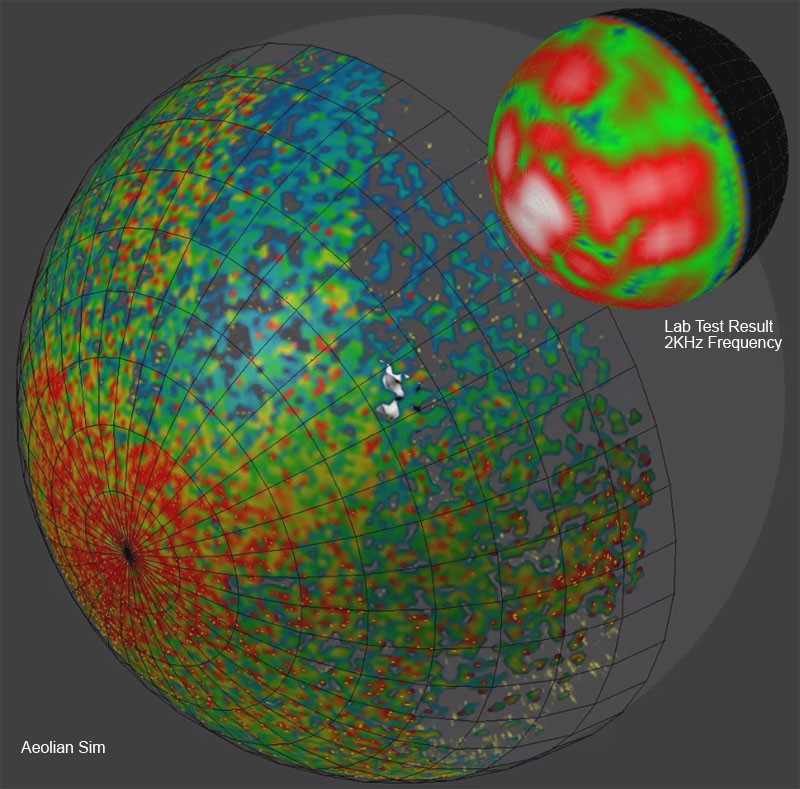
Simulations are compared to final test results before production. (Test result by NWAA Labs.)
The development process for the Aeolian™ was similar to that of our ‘Model D’. Various 3D models were created and refined, after which we ran acoustical simulations. Once we settled on what we considered the optimum design for what we were going for, a full scale 3D model was printed for lab testing. With the ‘real world’ test results in hand, confirming our predicted results, we set about making the final mold, and this new diffuser was born.
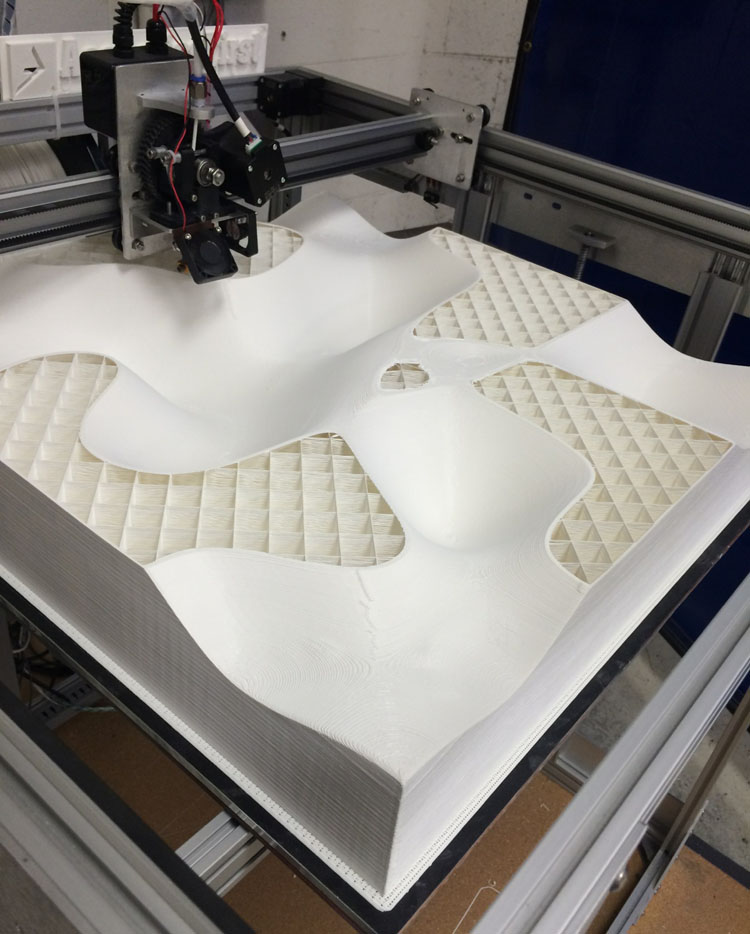
Pre-Production Prototype printing on the Gigabot

Aeolian Mold.

First batch of Aeolians!
The Aeolian™ Diffuser is class A thermoplastic, and 4 lbs. per unit.
Nominal size is 23-3/4” x 23-3/4” with a depth of 5.1”.
 Acoustics First BLOG
You must be logged in to post a comment.