Archive for category Gymnasium
Good fences make good neighbors: Acoustic Guide for Commercial Building Tenants
Posted by Acoustics First in Articles, Data Centers, Fitness, Gymnasium on March 27, 2017
Here at Acoustics First, we often receive inquiries from business owners who have moved into a commercial building shared with other tenants. Unsurprisingly, the most common acoustic issue is excessive sound transmission between neighboring businesses.
In commercial buildings with multiple tenants; such as outlet malls, office buildings and shopping centers, it is important to understand the nature of the neighboring businesses, especially ones directly next to, above or below an occupant. The following are categories of adjacent tenants with distinct acoustic environments which can disrupt or be disrupted by neighboring businesses.

A loud dynamic neighbor.
Standard Adjacencies: These neighbors tend to be have soft to moderate ambient noise levels that range from about 40-75 dBA, which generally remain constant throughout their operating hours. This often includes low-moderate levels of background music or chatter that has no significant amounts of low bass frequencies. Some examples of these spaces would be standard retail, electronics, clothing, or shoe stores, coffee shops, grocery stores, department stores, call centers, or an office with an open layout. The requirements for sound isolation associated with these types of adjacencies are less stringent, so standard construction practices are generally acceptable.
Dynamic Adjacencies: These neighbors come in two categories “loud” and “soft”. The neighbor that would be categorized as “loud” would have an average of ambient noise levels above 75 dBA for long periods of time throughout operating hours. This level of noise sustained over long time periods will conceivably disrupt other neighbors that share adjoining walls. Some examples of these spaces are pre-schools or daycares, kennels (doggy day cares), high-sound-intensity fitness studios (cycling, aerobics, Zumba, CrossFit, etc.), bars/restaurants with loud or live music, recording studios and live music venues.
The dynamic neighbor that would be categorized as “soft” would have average ambient noise levels below 40dBA during operating hours. With this type of noise level, there is less tolerance for excessive noise coming from adjacent spaces/tenants. It’s important to minimize the overspill of noise to these spaces to avoid disturbing them. Some examples of these types of spaces would be doctor or law offices, spas/massage therapy, yoga studios, upscale retail, fine dining restaurants, libraries and book stores.
Dynamic adjacencies will usually need specialized acoustic treatment and/or construction in order to control excess noise transmission. If you are surrounded by dynamic neighbors (both loud and soft) or would classify your business as dynamic, you may have to apply fundamental construction and extensive acoustic treatment to control noise transmission. That said, even after taking these precautions, the noise transmission may not be reduced to tolerable levels. Some examples of these situations would be a high intensity fitness studio next to a yoga studio, a live music venue sharing a wall with an upscale restaurant, a Law Office above a Daycare or a recording studio under a book store. Avoid the hassle and expense of extensive construction by choosing your neighbors wisely!
So remember: when you are considering commercial locations for your business it is quite possible that you may encounter a number of these issues. It’s always best to design your space with the acoustic requirements of your neighbors in mind.
Tone Tiles™ = COOL!
Posted by Acoustics First in Absorption, Fitness, Gymnasium, Multipurpose Rooms, Product Applications, Products on September 13, 2016
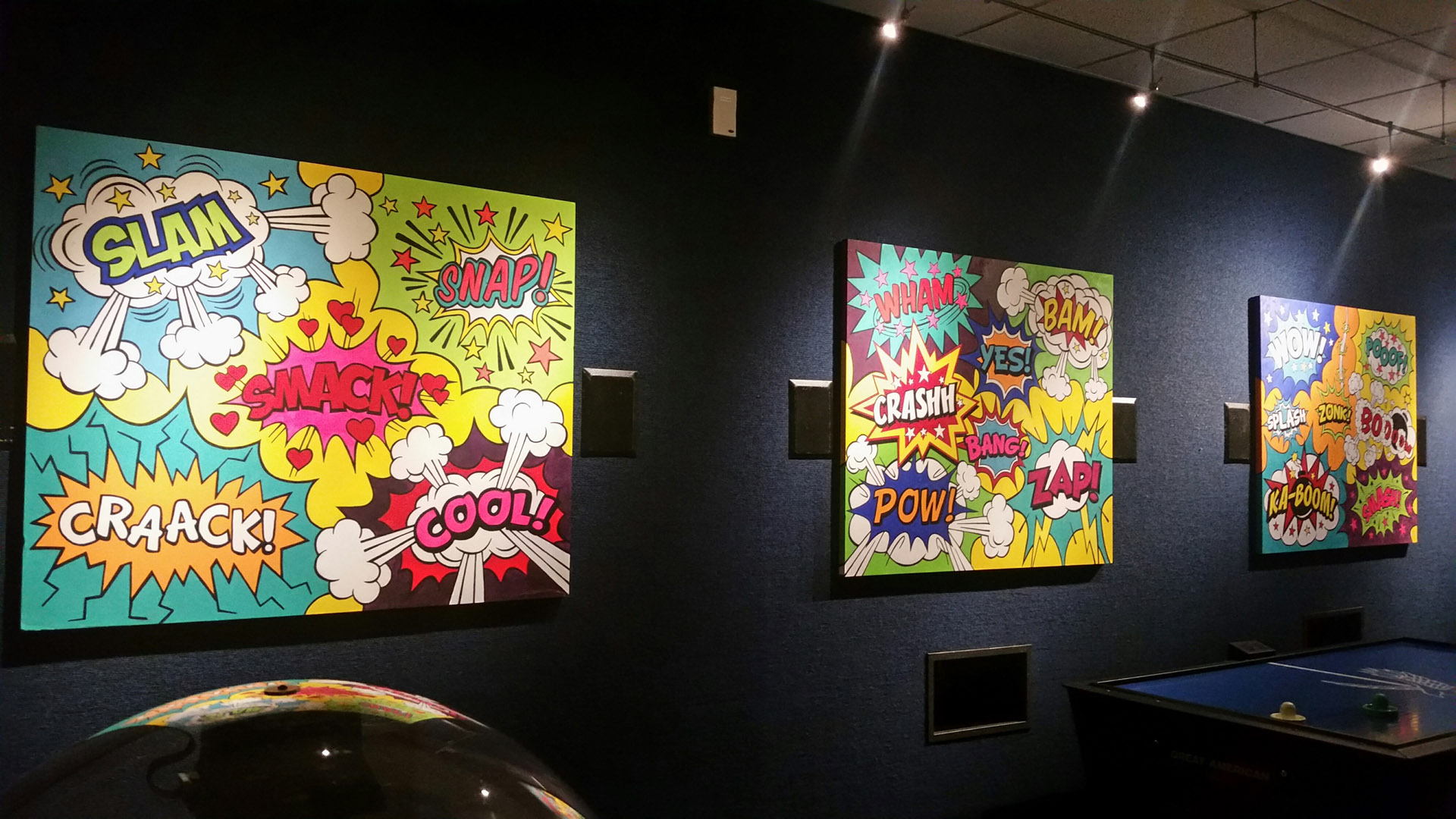
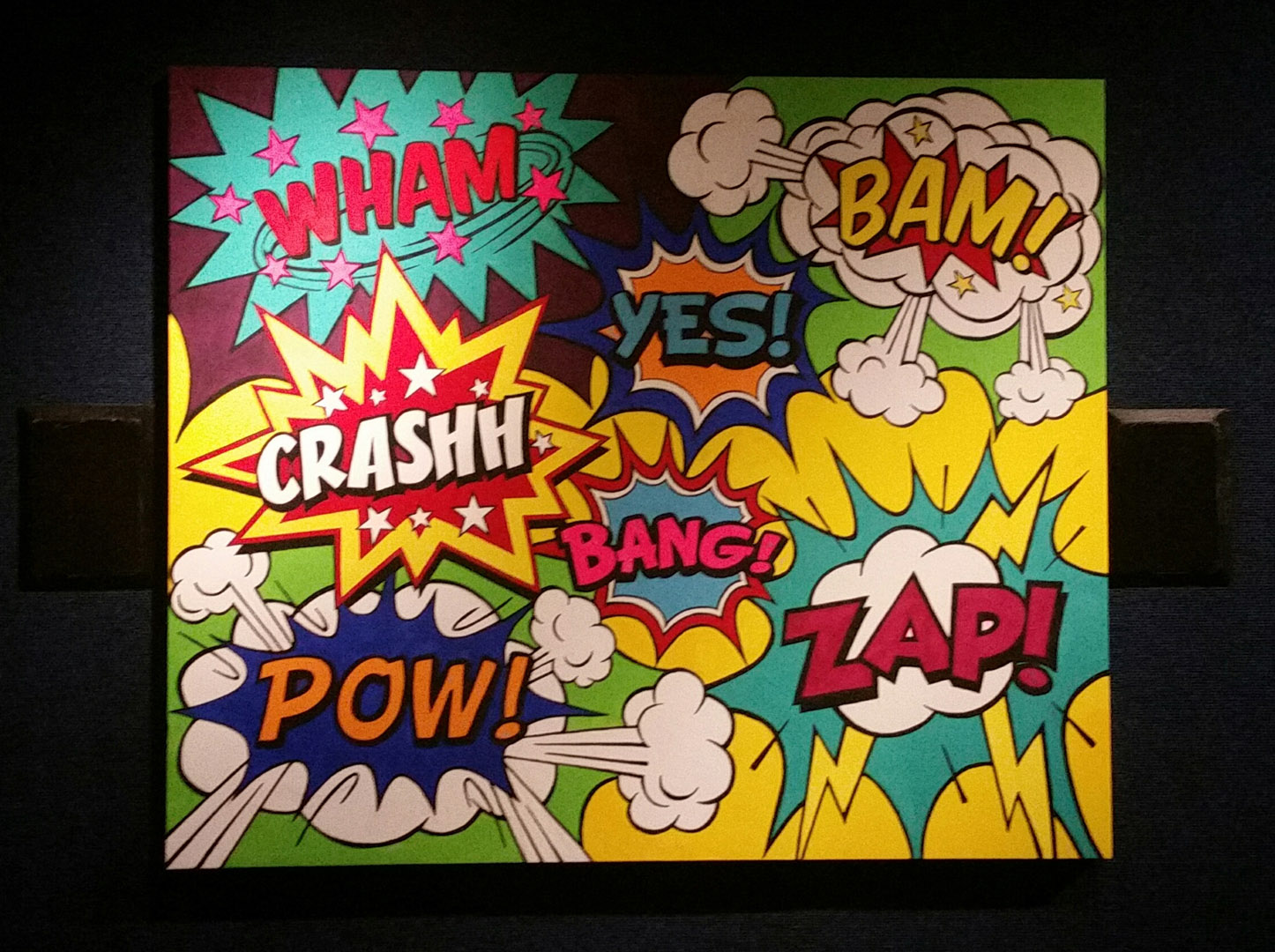 Hello Folks! We decided to share a few more eye popping pictures of our popular ToneTile™ product line. These paintable/printable panels can make for some of the most interesting and exciting visual accents to a space, in addition to their acoustical benefits. These painted ToneTiles™ were part of a larger installation for an Athletic Club in Delaware.

We think they turned out great!
DIY – Treating a Wall – BlockAid® and SoundChannels®
Posted by Acoustics First in Absorption, Animal Shelters, Auditorium, Broadcast Facilities, Classrooms, DIY, Fitness, Government, Gymnasium, Home Entertainment, Home Theater, HOW TO, Media Room, Multipurpose Rooms, Music Rehearsal Spaces, Music Tracking Room, Product Applications, Recording Facilities, Recording Studio, School & Educational Facilities, Sound proofing, Studio Control Room, Teaching Rooms, Teleconferencing, Theater, Uncategorized, Vocal Booth, Voice Over on July 16, 2015
 On many occasions, we get asked about common ways to treat a wall (or walls) either for broadcast, podcast, or other voice recording scenario – where they not only want to tame the reflections within the room, but also block a certain amount of sound coming into – or leaving the room.
Budget is frequently an issue, major construction is usually unwanted, but effective results are always required.
We’re going to show you how to handle a room upgrade – cut down on the sound transmission and cut the room reflections – all with the same skills required to hang high quality wall coverings! Let’s see how you can cover a wall with BlockAid® vinyl sound barrier to block unwanted sound, then go back and cover that with an absorptive layer of Sound Channels® wall covering to finish it off!
This treatment is not recommended for renters, as this is not an easy upgrade to undo. However, if you have an extra bedroom you are using as Podcast studio, this is a great way to treat it… Let’s get started!
Installing BlockAid®
 1. Measure the wall for the first panel length. Mark the panel width on the wall. |
 2. Measure and Mark the length of the wall on the BlockAid® |
 3. Use a straightedge and a razor to cut the BlockAid®. |
 4. Using a trowel, apply vinyl tread adhesive to the wall, covering the whole area where the first panel is going. (You marked the wall right?) |
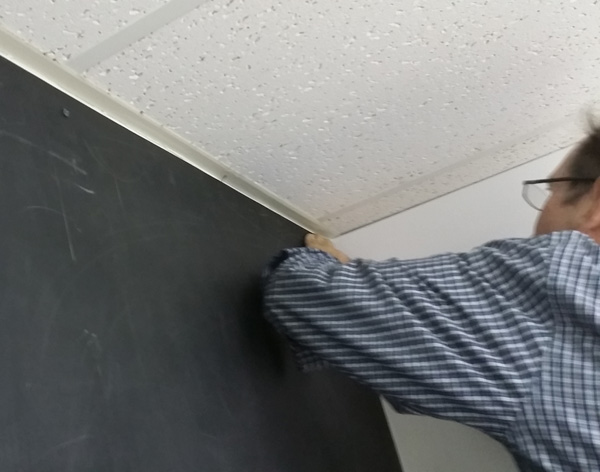 5. Hang the panel starting at the top, install a few screws to hold it in place while the adhesive sets. (You will probably need a friend to help, as BlockAid® is a pound per square foot!) |
 6. Using your hands and a putty knife, smooth out all the air bubbles from behind the BlockAid® so that you get a good bond when the adhesive cures. |
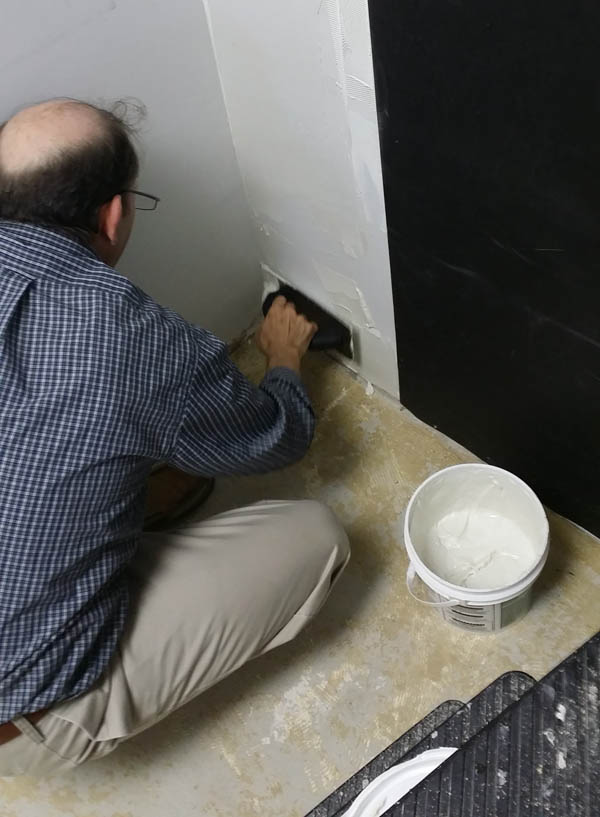 7. Repeat the steps for the next strip. Measure, Mark, Cut, Trowl, Hang… |
 8. Make sure you line up those seams! push them right up agaist each other. Smooth out the air bubbles, cut out any outles, trim any extra… Let dry! |
Good job! Now, take a breather while that dries, and notice how much less sound is passing through the walls. This is when you will notice that the sounds are now coming from under the door, and through the leaky old window. These can be taken care of in different ways…. but the easiest way is the same way you deal with keeping the cold out! Get some weather strip, a door skirt, seal the gaps around the frame of the door, and windows, maybe go out and buy some heavy curtains for the windows… if you have some leftover BlockAid®, you can always get some Industrial Velcro and temporarily stick a piece over the window!
Installing Sound Channels®
 1. Remove the Screws from the BLockAid® – if you didn’t already… then same as BlockAid®, measure the wall, mark it, measure and cut a piece of Sound Channels® and start troweling on the Chapco! |
 2. Well, when you get tired, make your friend finish troweling out the adhesive to cover where the panel is going. (You are going to overlap the seams.) |
 3. Starting at the top, hang the Sound Channels® overlapping the seam of the BlockAid® under it. Smooth out the air bubbles with your hands. Make sure it lines up well. No screws needed! |
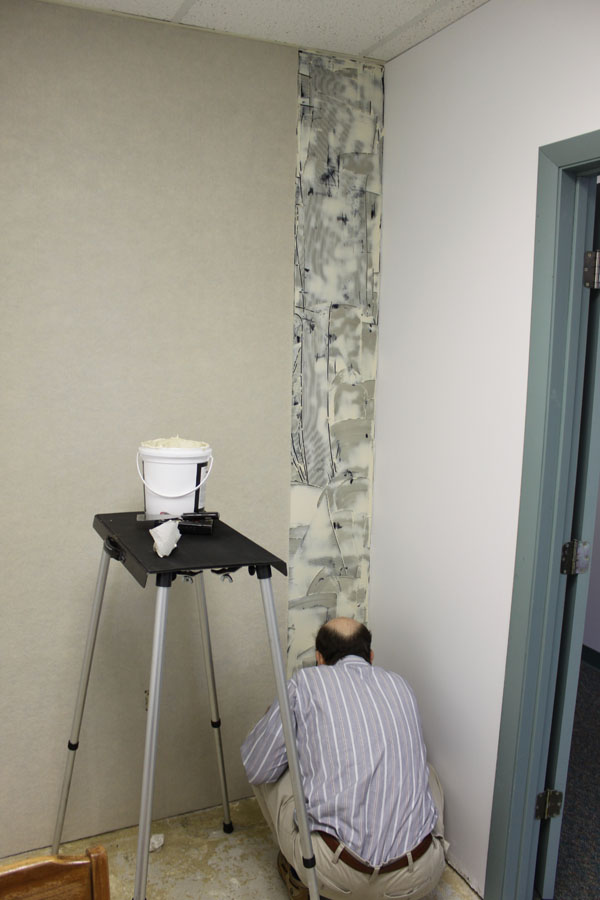 4. Measure and cut the next strip, carefully following a rib in the fabric, while your friend, (who is way better at troweling than you are anyway,) preps the next section with adhesive. |
 5. Best practice is to run the fabric in the same direction every time. Not just with the ribs, but in the same direction it comes off the roll. So find the top. |
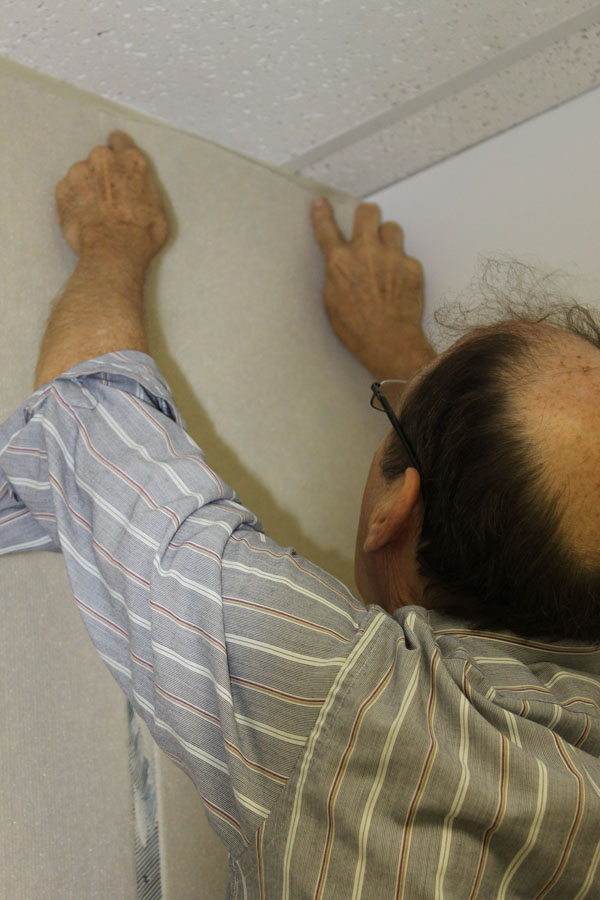 6. After you find the top, start hanging from the top, lining up the seams and smoothing out the bubbles as you go. |
 7. Keep those seams tight as you go. Keep smoothing… almost done! |
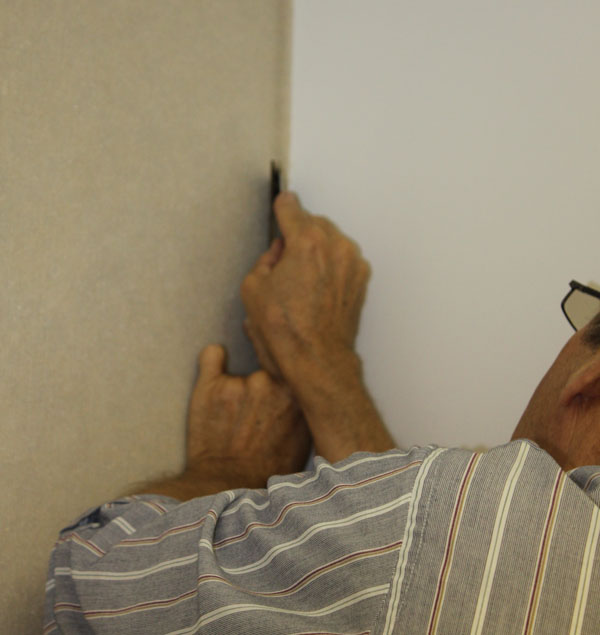 8. Trim up the extra and repeat as many times as needed. |
That’s it!

Don’t forget to trim around those outlets!
This treatment is a common first step in treating many professional broadcast studios – it gives you extra isolation with the barrier and takes the edge of the sound reflections. Many professional environments then go back and add some additional treatments such as bass traps, diffusers, and broadband absorber panels – especially if these studios are planning on bringing in any musical guests.
This isn’t just for home studios. It works great for kids play rooms, bedrooms, home theaters, home gyms, and any place you want to block sound and tame the sound inside the room.
Customize your space as you will, but this treatment is a consistent winner for cost and performance, and is a great way to get started without breaking the bank!
Yocumtown gets Peace and Quiet
Posted by Acoustics First in Absorption, Customer Feedback, Gymnasium, Multipurpose Rooms, Product Applications, School & Educational Facilities, Theater, Worship Facilities on May 14, 2014
Yocumtown Church of God had a bit of an issue with their multipurpose room – They couldn’t understand anything anyone was saying.
While the space was designed well with a full court, dampers on the HVAC, a stage, movie screen and a good speaker system – they couldn’t overcome the poor acoustics of the space. A great deal of work had gone into the design and they wanted an unobtrusive way to treat the acoustic problems… enter Acoustics First.
We started the work of gathering information about the space; dimensions, some pictures and a few balloon pops.
Here’s what we got.

Big Gym – perfect example of a common problem space.
Wow! This room is big, all the surfaces are parallel and hard, there’s very little to break up the sound… You can almost imagine what it sounds like.
You actually don’t need to imagine. Here’s a balloon pop. CLICK HERE!
What you’re hearing is about 3.5 seconds of reverberation after the balloon pop. (Not good.)
So, whatever shall we do? How will we tame this space?!?!?! Will they ever be able to have movies for youth groups!?
Sure they will! We have Joe. You remember Joe from the Sabot School Big Room Big Boom Post?
Well, I would say that Joe has a 6th sense for hearing, but since that’s one of the 5 standard ones anyway, we’ll just say Joe has great ears – and they should be. Joe’s been using his ears as his primary tools for the past 40+ years; from Studio Engineer to Acoustic Engineer. His ears are tuned instruments, and we rely on his expertise with them to get the job done right – time and time again. (He also makes a mean spreadsheet.)
So after listening to the room, looking at the data, and running some numbers – Joe magically answers the question of what do they need? (Ok it isn’t magic – Joe’s just really good at this… did I mention his spreadsheet skills?)
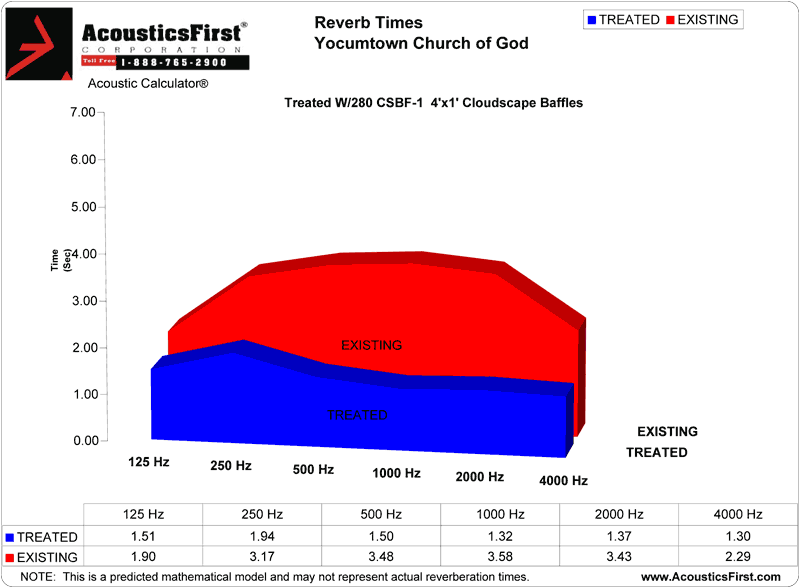
When he says, “this is what you need,” he also shows you what you have and what it will do.
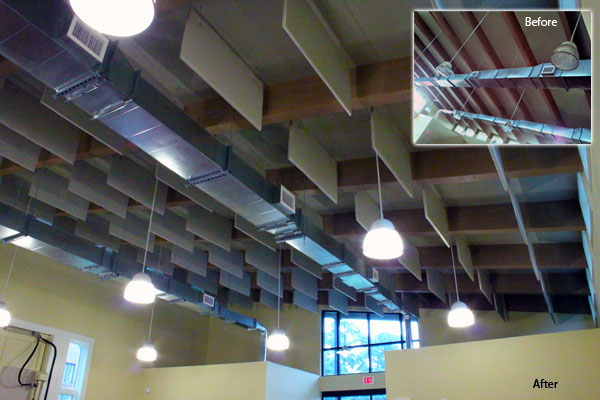
So Joe says, “You put 280 – 4’x1′ Cloudscape®baffles up on that ceiling and you’ll bring that room down from about 3.5 seconds to about 1.5 seconds.”
Joe knows.
So, Yocumtown goes from a 3.5 second balloon pop (Here) to a 1.5 second balloon pop (Here).
Not only does it look great…

NICE!
… But now they say that they can watch movies and it sounds just like you’re in a movie theater.
That’s about the best compliment you can give us.
(And the best compliment I can give Joe is, his calculation for RT60 time was about 1.5 seconds. When I ran the measurement of the “treated balloon pop” – I got 1.501 seconds. This is why we have Joe – he can tell you what you will get, before you even start!)
Big Room… Big Boom.
Posted by Acoustics First in Absorption, Art Galleries, Auditorium, Customer Feedback, Gymnasium, Multipurpose Rooms, Music Rehearsal Spaces, Products, School & Educational Facilities, Teaching Rooms on August 22, 2013
When Pippin Barnett contacted Acoustics First about an acoustical issue he was having with a new multipurpose space that was constructed for the Sabot School, he was in desperate need of a solution. This space was needed for functions, activities, art displays, music classes, plays, and more, but was almost completely unusable due to the acoustics.
 The large space was well conceived; large open floor plan, hydraulic door to open the space to the courtyard, bathrooms, storage and lots of display space for the student’s artwork and creations. The building was also efficiently constructed using SIPS (Structural Insulated Panel Systems), which created a grand open space with no support pillars.
  This space was ready to be used, but there was a problem – whenever they tried using the space, you couldn’t understand what anyone was saying. To say that the acoustics were “not optimal” is like saying that the destruction of the entire universe would be “inconvenient” – an incredible understatement.
Upon arrival, we took some physical measurements of the space to calculate the surface area and volume of the room, as well as got some acoustic measurements.
Click here for a balloon pop before acoustic treatment.
Whoa… Big Boom! What you are hearing is a 3+ second RT60 time; That’s more than 3 seconds of time that the sound lingers in your space at a level audible enough to interfere with other sounds.
Which is “Inconvenient,” and “Not Optimal.”
So with some magic calculations performed by Joe Horner over at the quietest office in Acoustics First,(no really – he likes it really quiet,) a solution was developed to create a space that sounded as good as it looked.
Joe prescribed 100 2’x4′ Cloudscape ceiling baffles as well as 157 sq ft of 1″ thick Sonora Wall panels to cover the solid hydraulic door – and we listen to Joe (he’s done this a lot!)
So, a short while later, the Baffles and Panels are installed and we receive an e-mail from Pippin…
“I’d say you were right on the money!”
Click here for a balloon pop after acoustic treatment.
RT60 from 3+ seconds down to right about 1 second. I’d say that’s right on the money too, Pippin!

The Sabot School regained the use of its space and everyone lived happily ever after.
I love happy endings.
 Acoustics First BLOG
You must be logged in to post a comment.