Posts Tagged bass trap
Why use a mix of objective and subjective goals to make a great sounding space?
Posted by Acoustics First in Articles, Media Room, Music Tracking Room, Recording Facilities, Recording Studio, Studio Control Room on July 30, 2024
With the ability to measure and analyze every detail of an acoustic environment, sometimes we forget about the basic fact that it should sound the way we want it to sound. There are scenarios where objective measurement is important, desired, and even required. If there is a physical safety concern that may damage hearing ( loud noises, machinery, etc.), a need to have safety information understood (evacuation/safety notices or alarms, etc.), absolute sound privacy is required (HIPAA regulations, government security, or legal need…), or the need for speech clarity for education… often we require some guidelines be met to insure the acoustics meet a decided standard for performance. These standards use objective measurement and data to make these determinations. There isn’t a governing body that regulates how your home theater should perform, or how an office needs to sound (beyond the safety and privacy concerns mentioned above.)

Entertainment venues, theaters, churches, commercial spaces, restaurants, offices, and residential spaces have very little regulation, and while there are many occasions that testing is used to improve the performance of these spaces, there are some environments where the effort to measure and quantify everything can get in the way of the goal of making a great acoustic space. If you wanted to compare different small “critical listening environments” (mixing and mastering studios are examples of these), there would be some general commonalities in their construction and treatment. Many are built to minimize parallel reflections, have short reverb times, symmetric placement of source speakers, control first reflections, and balance the frequency performance of the space.
A “ruler-flat” frequency response shouldn’t be the acoustic goal.
“Balancing the frequency performance of a space” doesn’t mean “attain ruler-flat frequency response across the entire human hearing range.” There are several reasons that the “ruler-flat” interpretation is counterproductive – the first being that it is nearly impossible to attain in any room. Second, is that everyone perceives sound differently. As humans age, almost all people will experience some degree of “presbycusis,” which is slow decline in high-frequency sensitivity that comes with age. If you are lucky enough to reach a ripe old age, there is a 60% – 80% chance (depending on the study you read) that your high-frequency hearing won’t be what it was when you were young. But even with that factor removed, when your hearing was at its best, your personal perception of sound is different from every other person – making sound, by definition, subjective.

The closest you can get to ruler-flat performance is to remove the room entirely and get some high quality headphones – but you may still find yourself tweaking the equalization curve to your preference. There are many people who feel that headphones sound unnatural, or that they are uncomfortable to listen to for long periods of time. Even the best mixing studios are not completely flat. Also, you will see many different sets of speakers in these spaces… or even headphones. These different sources are to compare how a mix will sound in different environments… and that the mix will “translate” in different listening scenarios. These environments which people will listen to music in vary to include outdoors, bathroom, kitchen, movie theater, grocery store, car, truck, SUV, convertible, living room, and more… coming from sources like phone speakers, headphones, assistants like echo and Google, bookshelf speakers, sound bars, audiophile equipment, movie theater sound systems, and an array of automotive audio systems.

Start with the basics.
If you are making a space for critical listening, there are some objective guides that will help you. If building from scratch, build with a geometry that will reduce room modes and parallel surfaces. Reduce reflections that will interfere with the source. Reduce reverb time. Control the bass response to reduce build up. These can all be readily calculated, measured, and controlled with bass traps, absorption, and diffusion. Most of the time, just following these objective guides will get you a room that will sound subjectively “good.”
After you get that far, you could continue trying to measure the room and tweak the performance to try and attain the unattainable ruler-flat response… or you could listen to music in your room and decide with you ears what should to be done to make it sound how you want. There are many subjective arguments people make about why they think something sounds better. There are philosophical arguments about listening to it “as the engineer/artist intended.” There are debates about if you should equalize music at all – even if you are in the majority of the aging population who may need to give the high-frequencies a nudge to experience the sizzle of Stevie Wonder’s glorious high-hat mastery.
When it comes to your own space… if it sounds good to you… it’s right. By following a few objective guidelines to get you in the arena, you can tweak the last bit with your ears until you are experiencing the material the way you prefer it to sound.
Sonora® LFC – Low-Frequency Control Panel
Posted by Acoustics First in Absorption, Auditorium, Home Entertainment, Home Theater, Multipurpose Rooms, Music Rehearsal Spaces, Music Tracking Room, Press Release, Product Applications, Products, Recording Facilities, Recording Studio, Studio Control Room, Theater, Uncategorized, Vocal Booth, Voice Over, Worship Facilities on May 24, 2021
Bass frequencies are difficult to control… and there is sometimes a tendency to overuse standard, broadband panels to try to absorb everything in order to get rid of that bass. However, this method is unbalanced and has the side-effect of leaving a room sounding muffled and boomy.
Why?
Physics! High frequencies are easier to absorb than low frequencies. So, when you ONLY use broadband absorbers, they easily remove the high frequencies and leave more of the lows. Overusing broadband absorption in a large performance space can be a disaster – leaving an environment lacking energy and feel – many describe this condition as a room sounding “dead.” (Not good!)
So how can you treat the boomy bass without killing your rooms with too much broadband absorption? Can you just take out the bass? Unfortunately, it is impossible to ONLY absorb the bass, but we can LIMIT the amount of high frequency energy that we absorb to balance out the response.
Acoustics First® presents… the Sonora® LFC – Low-Frequency control panel.
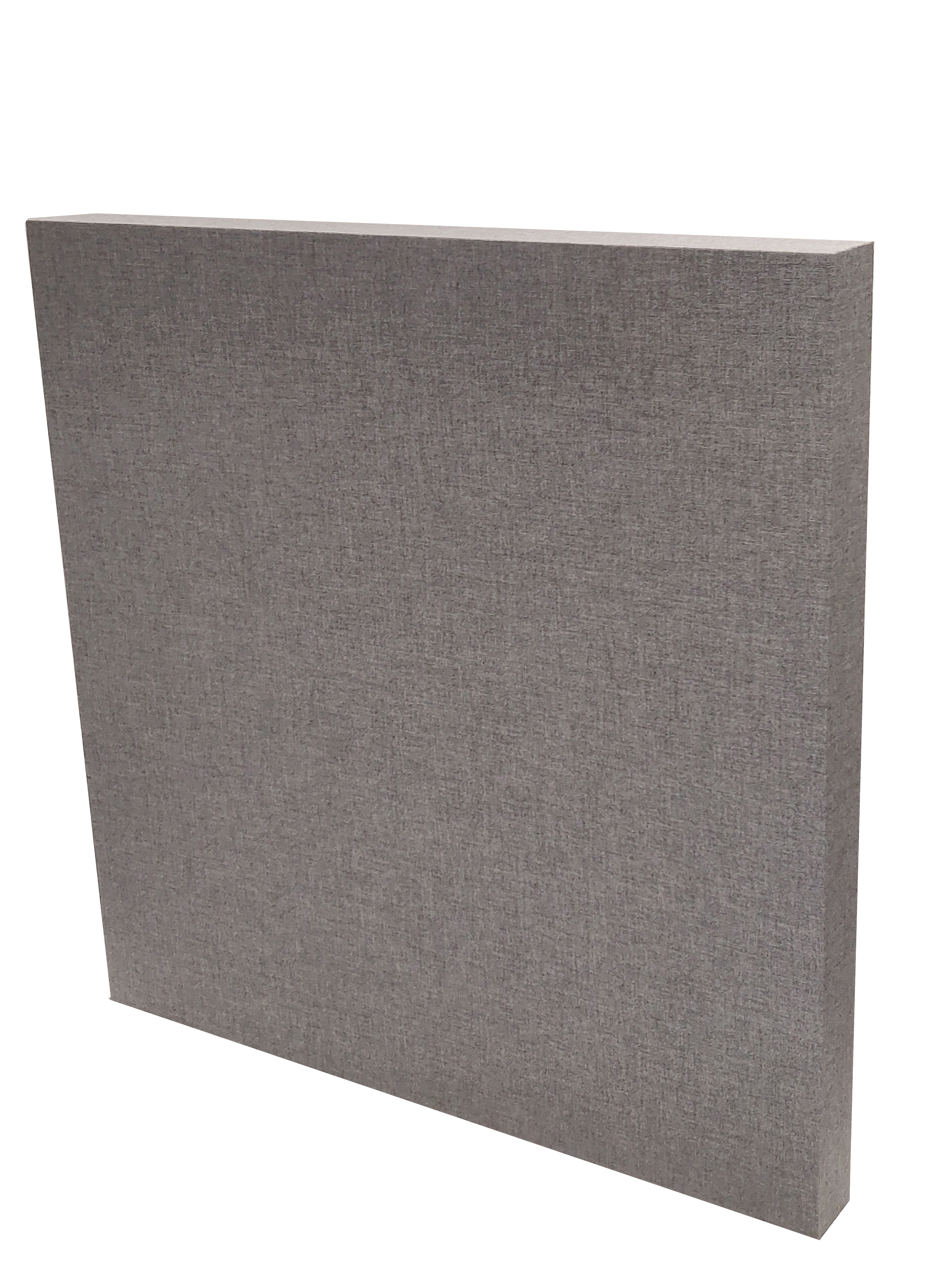
The Sonora® LFC looks like a standard Sonora® Wall panel, but looks can be deceiving! At 4-1/8″ thick, it is virtually indistinguishable from a High-Impact Sonora® panel – however the interior structure of the LFC is optimized to attack the bass frequencies and smoothly roll off the high frequencies. Let’s take a closer look at the performance difference between the Sonora® LFC and the standard Sonora® panel.

When you look at the performance charts, you will notice that the standard 4″ Sonora® panel starts to “roll-off” in the lower frequencies below 125 Hz – it still absorbs them, just to a lesser degree. We designed the Sonora® LFC panel to focus on those frequencies below 125 Hz – while allowing the other treatments to handle the rest! This allows you to use fewer broadband panels, and still have some high-frequency energy for diffusers to spread around – thus creating a more balanced acoustic environment.
The Sonora® LFC is an engineered solution using the same high-performance materials as our other products, but combining them in a way that optimizes them for Low-Frequency Control – hence Sonora® LFC! The magic is in the way those materials are used.
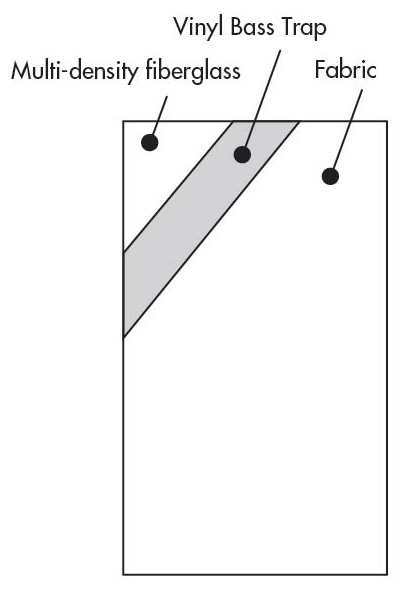
All of the materials used in an acoustic environment have a function – “Diffusers,” “Absorbers,” and “Bass Traps” are all general descriptors of product functions. Some diffusers are also Bass Traps. Some bass traps are also broadband absorbers. Some diffusers use absorption for amplitude grating. By combining a dampened, resonant trap with multi-density fiberglass, the Sonora® LFC focuses on making acoustic spaces more balanced. For controlling the bass without sucking the life out of a room, the LFC Panel is an outstanding tool for refined Low-Frequency Control!
Sonora® Corner Bass Trap – Low Frequency Control
Posted by Acoustics First in Absorption, Product Applications, Products, Uncategorized on April 21, 2020

Sometimes a simple solution is the best solution. That is the guiding philosophy behind our new Sonora® Corner Bass Trap. Take one 4” thick, 6-7pcf sound absorbing fiberglass panel, back bevel to fit in a corner, front bevel for a nice finished look, throw in a few corner clips for mounting, and done!
The Sonora® Corner Bass Trap was born.
This bass trap lives up to the design aesthetic and functionality of the Geometrix® Quarter Round unit, but at a lower price point with reduced weight for an easy installation. Available in widths of 24” or 18”, standard length is 4’ with custom lengths available.
The Sonora® Corner Bass Trap is a great option for studios, theaters, or any critical listening environment where broadband absorption with enhanced low frequency control is desired.

Bevelled front & rear for a clean, finished look when installed.
Bonus Room to Project Studio! Nick Lane Mastering
Posted by Acoustics First in Absorption, Customer Feedback, Diffusion, DIY, Recording Studio on February 23, 2017
Nick Lane, an independent audio engineer whose credits include Rascal Flatts and Reba McEntire, contacted Acoustics First® seeking help with his project studio. This process would convert the bonus room in his house (a second floor space above his garage) into a Project Studio.
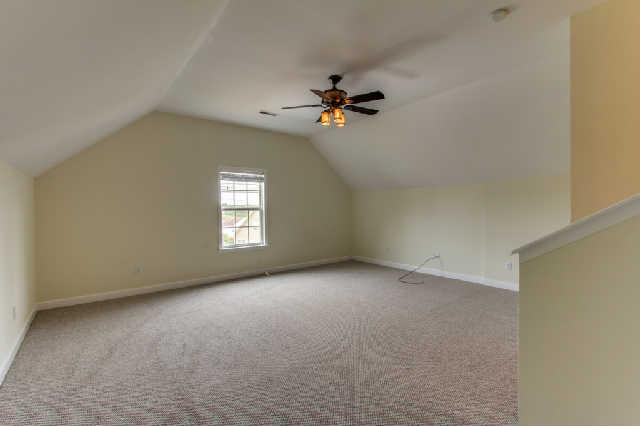
After receiving some measurements and photos, we went to work designing a layout for the space.
 |
 |
Placement of panels and ceiling clouds were optimized to reduce early reflections and trap bass, and a combination of Model D’s and C’S were used to widen the “sweet spot” of his room.

“Sounds really good!….. High end is sooo much less harsh…… walking around the room, the low-end doesn’t disappear in places anymore” – Nick Lane

Then and now… Diffusers and Don Juan.
Posted by Acoustics First in Auditorium, Broadcast Facilities, Classrooms, Diffusion, Home Entertainment, Home Theater, Media Room, Multipurpose Rooms, Music Rehearsal Spaces, Music Tracking Room, Recording Facilities, Recording Studio, Studio Control Room, Teaching Rooms, Teleconferencing, Uncategorized, Vocal Booth, Voice Over on July 4, 2013
 Four score and seven years ago (1926), movies had just begun integrating sound along with the visuals, as Warner Brothers released Don Juan – syncing a 33 1/2 rpm audio disc to the video as part of the new Vitaphone system. The era of talkies had arrived, as did a new era of fake accents.
While we still have those fake accents from the days of yore (and Johnny Depp as Don Juan), we have new technologies to bring us our entertainment – high-definition video on big screens with 10.2 digital surround sound, playing in home theaters that rival the best public theatrical venues.
While we have seen (and heard) the technological evolution of movies to what they are today, we have also seen (and heard) the evolution of acoustics – and the one area I’m going to discuss today is one of the fastest evolving acoustic disciplines – Diffusion.
Diffuser design has come far from the early days of scattering sound by changing the angle of your wall, or the shape of the room to negate, dilute, or diffuse unwanted or undesirable acoustic waves. Today, acoustic diffusers are mathematical and scientific wonders, designed to be elements that are inserted into your listening environment to create an acoustic space that is open and airy.
During this evolution of diffusion we have seen the rise of many shapes; The Pyramid, the Barrel, the Binary Arrays, Flat Panel, 1D and 2D QRDs, and more… a veritable cornucopia of geometric shapes and mathematically produced profiles, which are scientifically sound, but fundamentally, inorganic.
The notes on the instruments we play, are based on math and physics, but the music we play ebbs and flows from the pounding of drums to the smooth bass lines, from the intimate vocals to screaming, and from the heavy metal acts to classical symphonies (with or without a heavy metal act). Diffusers have followed suit, changing their shape along with the changing industry – making advances as new discoveries are made.
Diffusers have become important acoustic treatments in listening rooms, recording rooms, sound stages, and theaters – embrace the diffusers! Embrace the future Don Juan’s and their terrible accents… ok… just diffusers… fine.
 Acoustics First BLOG
You must be logged in to post a comment.