Archive for category Product Applications
Binaural Bob Returns!
Posted by Acoustics First in Absorption, Diffusion, Offices, Product Applications, Products, Uncategorized, Video on April 5, 2018
Back in the summer of 2015 we had a good time stuffing a bunch of our Model D Art Diffusors® into an empty storage closet and making a bunch of racket. The results were recorded, with the help of our friend Binaural Bob and the resulting data provided some interesting insights.
Well, Binaural Bob is back! This time we had a larger room than before (10’x9’x8’), and experimented with wider variety of sounds and treatment options. While this is obviously not the same as a controlled laboratory test, it does have a certain ‘real world’ flavor that’s relatable.
For best results, turn off any compression/effects and listen on headphones.
Reference Sounds played through speaker
Ye Olde Balloon Pop Test! (Calibrated 12″ Shiny Red Latex Party Balloons!)
WARNING! BALLOONS ARE LOUD – TURN IT DOWN!
Aeolian™ Diffuser – Mash up
Posted by Acoustics First in Diffusion, Home Theater, Music Tracking Room, Recording Studio on January 19, 2018

Here’s one of the first install pics of our new Aeolian™ Sound Diffusers, installed in a home project studio. Also note the Art Diffusor® Models F & C, in the ceiling and behind the speakers respectively. This is obviously a diffuser connoisseur’s room.
Below shows the room after the Sonora® products are installed.

Fellowship Halls!
Posted by Acoustics First in Absorption, Multipurpose Rooms, Product Applications, Worship Facilities on December 18, 2017
As 2017 rapidly comes to a close, here is a look at a couple of more installations from earlier in the year. Both of these fellowship halls were done by the same AFC dealer/installer. As you can see, although the rooms differ greatly in shape and size, they were both treated with our Sonora panels.

A long narrow hall.
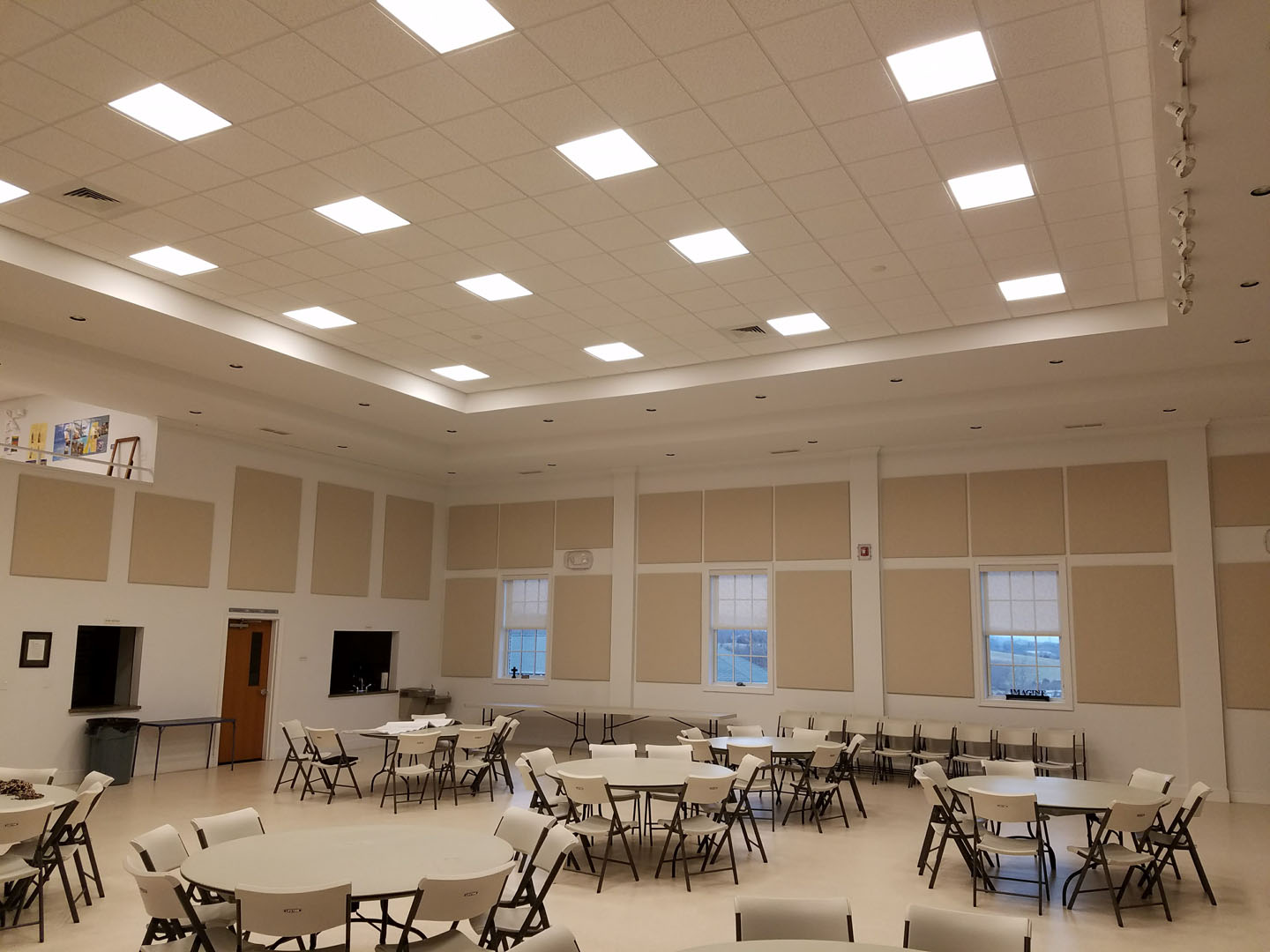
A large open hall.
It’s all about panel placement.
Merry Christmas and Happy New Year!
Sonora® Panel – Church Installation!
Posted by Acoustics First in Absorption, Product Applications, Products, Worship Facilities on November 21, 2017
What can you say about the tremendous benefits of acoustical panels for churches that hasn’t already been said?

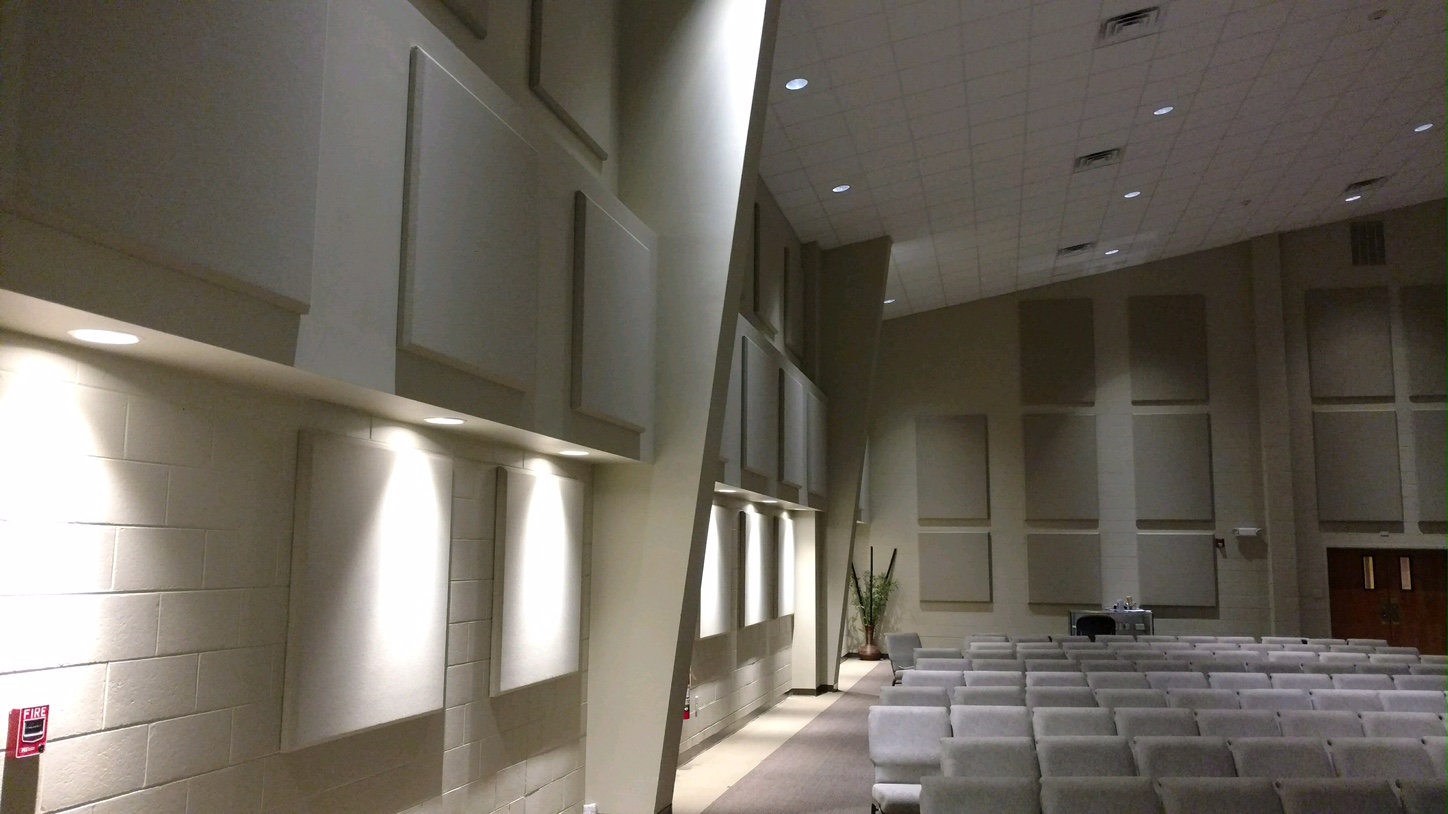
Here are a few pictures from another fantastic installation.
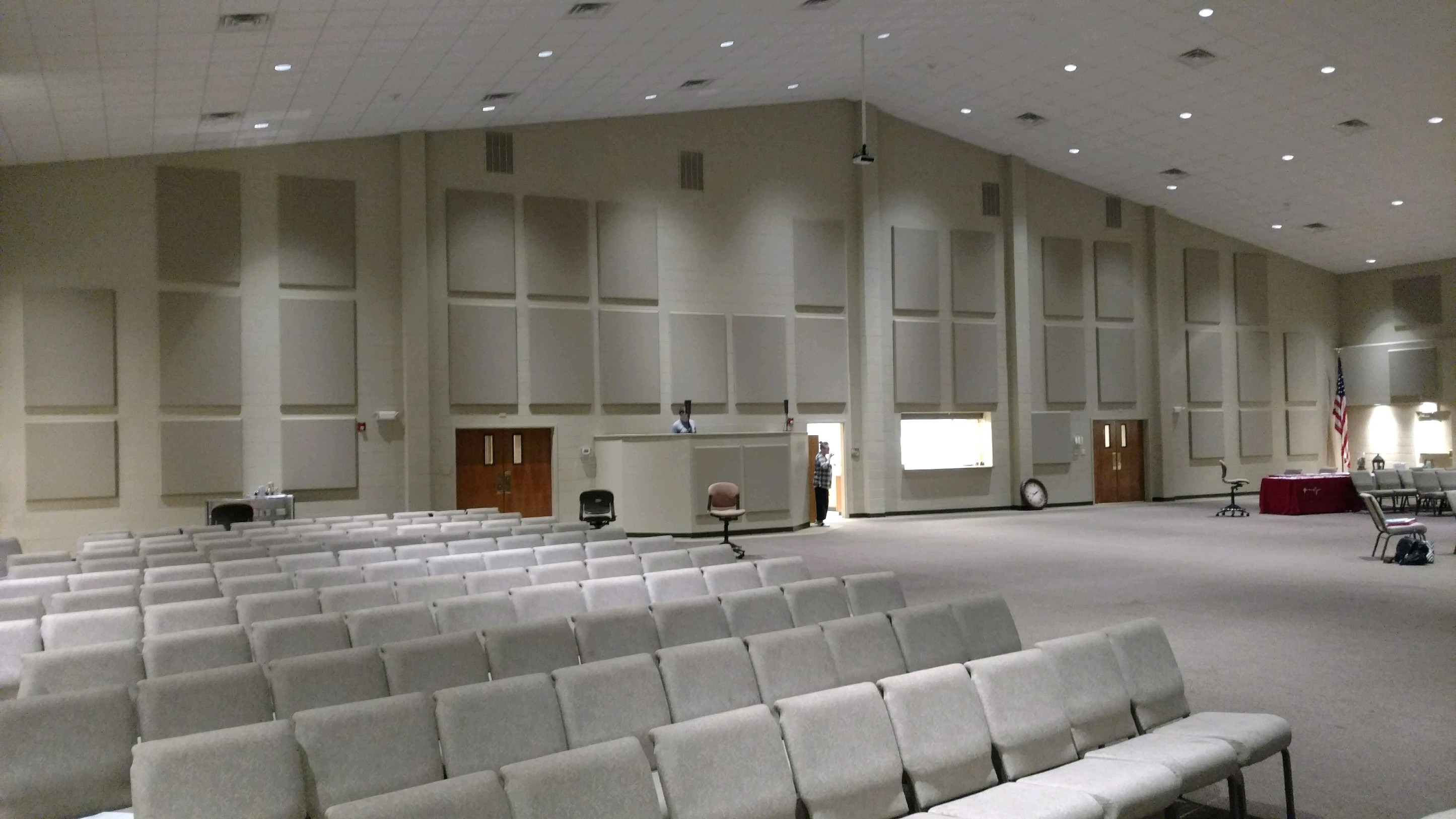
These Sonora® Wall Panels were specified by Cameron Girard in our technical sales department.
Demystifying Acoustic Data: Part 3 – Perception of Volume
Posted by Acoustics First in Product Applications, Sound proofing, Uncategorized on June 16, 2017
 For anyone new to the world of acoustics, there is a multitude of terms, coefficients and numbers that are thrown around. This flood of information can seem intimidating, especially to beginners. In this series, acoustician Cameron Girard of Acoustics First® hopes to help you distinguish between what’s useful and what’s not.
Part 3: Perception of Volume
Our ears are wonderful and intricate tools that many of us take for granted. It is very important to understand the idiosyncrasies of our hearing when considering the effect a certain acoustic treatment will make. For starters, let’s take a look at how our ears interpret volume.
Volume (Sound Intensity)
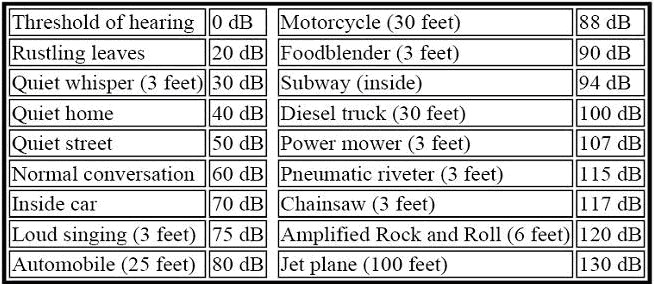
Sound levels (i.e. how loud something is) are typically expressed in decibels (dB). Human hearing ranges from 0dB (threshold of hearing) to 130dB (threshold of pain). The following chart displays common sound sources and their typical dB level.
Do two candles really burn twice as bright?
If one trombonist plays at 70dB, how much louder would it be if another trombonist started playing at 70dB? One might assume that the two trombonists combined would play at 140 dB, but this is not the case. Since decibels are logarithmic values, they cannot be combined by normal algebraic addition. When two sources at the same level play, 3dB should be added to the value to find the combined sound level. So in adding another trombonist, you would really only increase the level to 73dB, a much smaller jump than expected.
“Doubling” the amount of players will double the acoustic power, but what do we actually hear? The loudness perception table shown below displays how these decibel changes are actually perceived by the listener.
|
Loudness Perception Table |
|||
| Change of Level | Approx. Perceived Difference | Volume Gain Factor | Acoustic Power Gain Factor |
| +10dB | “twice as loud” | 2.000 | 10.000 |
| +6dB | “significantly louder” | 1.516 | 4.000 |
| +3dB | “noticeably louder” | 1.232 | 2.000 |
| ±0 | “no change” | 1.000 | 1.000 |
| – 3dB | “noticeably quieter” | 0.812 | 0.500 |
| – 6dB | “significantly less loud/noisy” | 0.660 | 0.250 |
| – 10dB | “half as loud” | 0.500 | 0.100 |
*Chart Courtesy of David Eagan’s Architectural Acoustics (New York: McGraw-Hill, 1988),
As you can see, doubling the acoustic power (a change of 3dB) would be “noticeable” but not “significant”. It would take a jump of 10dB to make something sound twice as loud. Keep this chart in mind when reviewing acoustic predictions, particularly those that that pertain to noise reduction/control and sound isolation.
 Acoustics First BLOG
You must be logged in to post a comment.