Archive for March, 2025
Eat with your Eyes (and Ears): Acoustic Treatment for Restaurants
Posted by Acoustics First in Absorption, Products, Restaurants on March 21, 2025

When evaluating a restaurant, guests will often look at four factors: food quality, service, price point and atmosphere. The first three are fairly obvious in terms of how they influence the customers satisfaction, but the link between atmosphere and guest satisfaction is a bit murky.
Atmosphere is a sort of “catch-all” term for the various room and design elements that contribute to the overall experience of the patrons. “Atmosphere” is usually associated with visual elements, like lighting, table setting and decorations, but “atmosphere” can literally refer to the air in the room (is the restaurant properly ventilated, are there distracting smells from the kitchen?) or more functional/operating elements like the layout of the tables and, our focus in this article, sound management.
Sound Management – How many times have you been to a busy restaurant that is so loud you can’t hold a conversation with those at your table? It’s difficult to understand speech when background noise and reflections from other sources cover up new information. This causes patrons to elevate their voices to be heard, further exacerbating noise level issues.
Studies show that patrons spend more time and money at restaurants that properly address sound management, ensuring their guest don’t feel overwhelmed at peak hours. Key considerations include:
- Background music: Choose music that complements your restaurant’s concept. Adjust the playlist and volume based on the time of day and desired energy level—soft jazz for a relaxed dinner or upbeat tracks for a lively lunch.
- Comfortable conversation levels: Keep music and ambient noise at a volume that allows guests to speak without straining to hear each other. The right balance creates a welcoming buzz without becoming disruptive.
- Consider layout impacts: Open kitchens, high ceilings, or closely packed tables can amplify noise. Think about incorporating design features like partitions and high booths to help “break up” sound that is traveling from table to table.
- Acoustic design elements: Sound will build up most in spaces that have a lot of hard/reflective surfaces. Use sound-absorbing materials like acoustic panels to reduce reverberation/echoes and create a more intimate atmosphere.

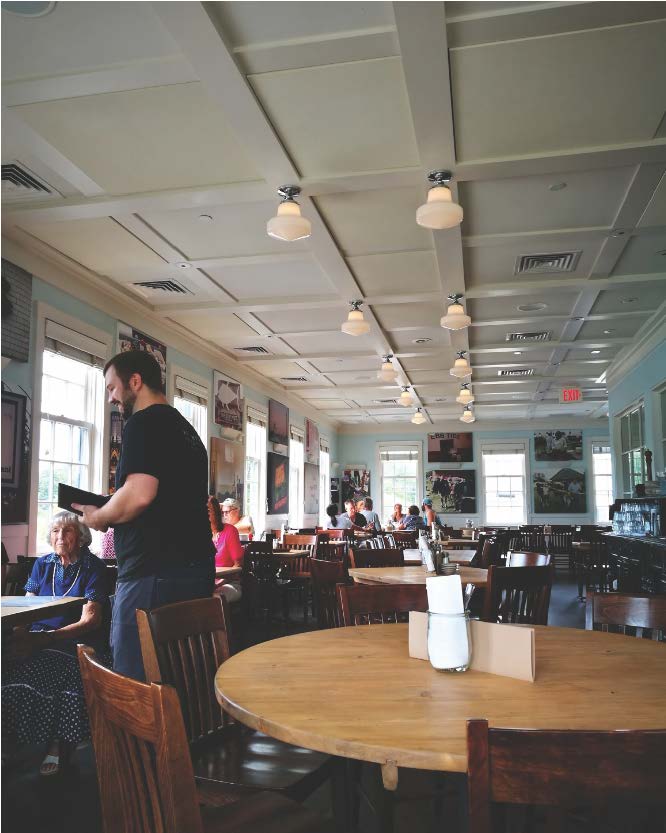
Tone Tile Panels – In restaurants, it’s especially important to minimize visually obtrusive acoustic treatment so it does detract or conflict with the carefully constructed aesthetic of the dining room. Tone Tiles are a perfect solution for restaurants that require “invisible” sound absorption as they can be field or factory painted to match the wall or ceiling color precisely. They also have a white, lightly textured surface that resembles drywall (Tone Tiles can be used as projector screens). Keep in mind, the more you paint an acoustic panel, the less sound reaches the absorptive substrate. We recommend light passes with water based paint to ensure the surface of the panel remains as acoustically “transparent” as possible
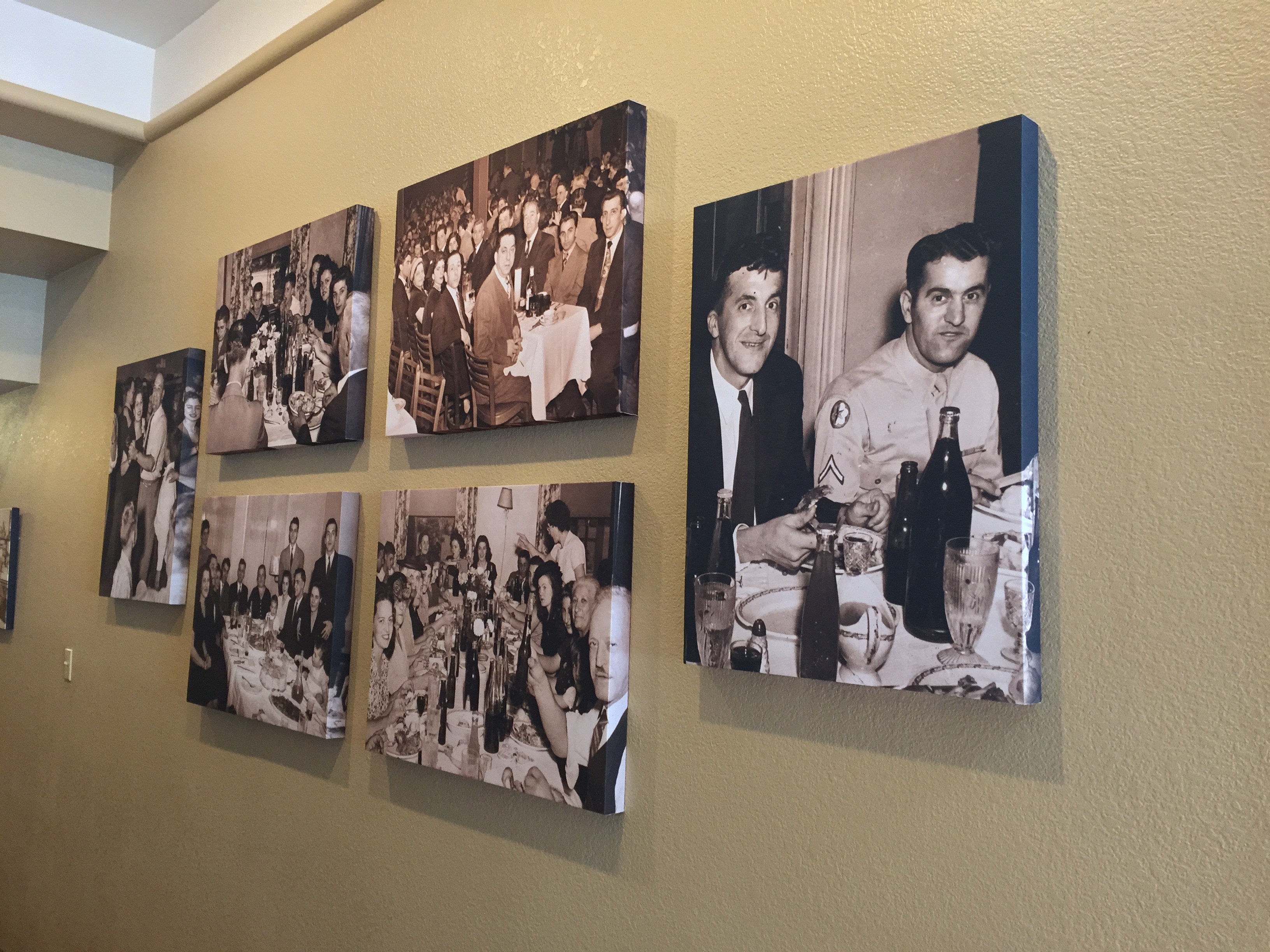
Silent Picture Panels – Another popular treatment option is our Silent Picture panels. Silent Picture panels can be wrapped with customer supplied artwork, images or branding. Restaurants love the double utility of full-color images and premium sound absorption.
Can’t I just put foam under the tables? We do not typically recommend acoustic material underneath restaurant tables. Treating the underside of tables will only “take the edge” off overall sound buildup, primarily attenuating sounds produced below the table (shuffling feet, chair slides, etc.). Sound absorptive treatment is much more effective when in the direct “line of sight” of primary sound sources. Also, installing acoustic foam or felt under tables, where it is likely to be picked at or possibly soiled, present durability and sanitary concerns.
We’ve all heard the expression that we “eat with our eyes”; if the meal is not appealing to look at… it is less pleasing to eat. However, we also “eat with our ears”; if the environment is not conducive to comfortable conversation, then the customer will leave with a bad taste in their mouth, even if the food quality and service is exceptional.
 Acoustics First BLOG
You must be logged in to post a comment.