Posts Tagged owl
The Spellbinding World of Owl Acoustics…
Posted by Acoustics First in Articles, Uncategorized on October 16, 2025
Today we thought we’d take a break from the usual Acoustics First blog topics and talk about owls and the fascinating way in which they experience acoustics. Owls possess some of the sharpest hearing in the animal kingdom. But what makes their hearing so exceptional and how does it differ from our own?
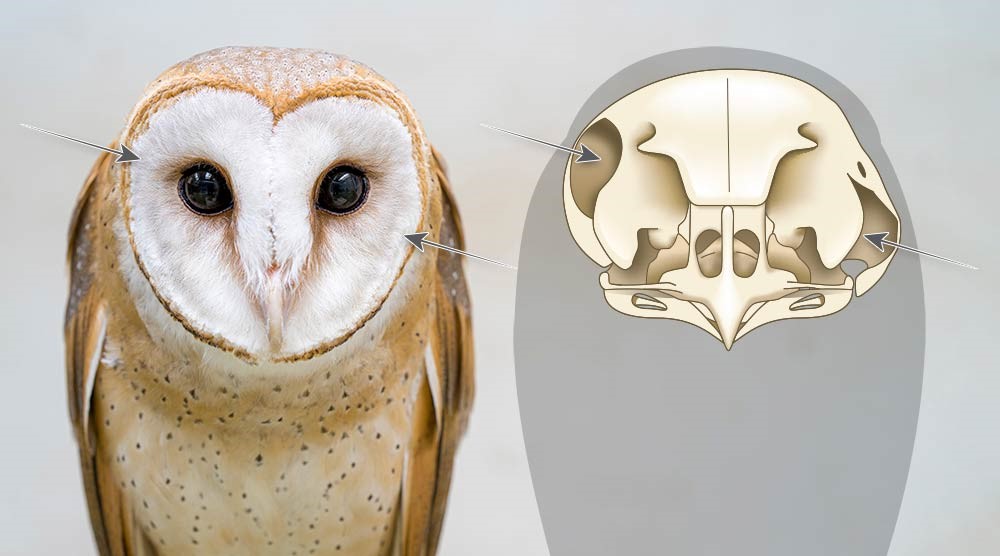
The secret lies in the unique structure of their faces and ears. Owls have flat, circular faces which gives them an incredible ability. Their facial discs, a set of specialized feathers arranged in a ring around their face, act like a natural sound collector, similar to a satellite dish picking up signals. These feathers are flexible, allowing them to adjust their position for optimal sound gathering. The sound they collect is then funneled into their ear openings located on the sides of their head. Imagine if we could move our ears to “zero in” on a particular sound!

Now, you might be wondering about those “ears” that stick up from an owl’s head. These aren’t actually ears at all! Those feathers are called plumicorns, and while they help with camouflage and communication between owls, they don’t contribute to hearing. The true ear openings are located on the sides of the owl’s head, much like humans. These openings are protected by a layer of feathers, and in some species, they even have movable flaps that can cover the ears. These flaps don’t interfere with hearing; they help reduce the sound of air turbulence when the owl is in flight.
What makes an owl’s hearing even more extraordinary is the position of its ear-holes. Unlike most animals, owl ear openings are asymmetrical, meaning one ear sits higher than the other. This unique design allows them to pinpoint sounds not only left or right, but also above or below. Thanks to this setup, owls can triangulate the source of a sound with incredible precision—sometimes within millimeters! This ability allows them to swoop down and catch prey they’ve never seen. The degree of asymmetry varies among owl species—some, like the Northern Saw-Whet, have a noticeable difference in ear placement, while others have more subtle variations. Either way, it’s an impressive adaptation!
Humans, like many other animals, have symmetrical ear-holes, making it more difficult for us to pinpoint whether a sound is coming from above, below or directly in front of us. This is why central clusters of speakers installed above a lectern effectively make the sound feel like it’s coming directly from the orator, not from the ceiling speakers.
Owls also have a “sound-location memory” that further enhances their hearing. When they hear a sound, their brains create a mental map of its location relative to the owl’s position. Special cells in their brain help process sounds from different directions, allowing them to track and locate the sound later.

Finally, like dogs, owls have a broader range of hearing than humans, and they can detect finer details within sounds. According to researchers, owls can hear sounds much faster than we can. While humans process sounds in increments of about 50 milliseconds, birds can discern sounds as short as 5ms. This means that where humans might hear a single note, owls may hear up to 10 distinct notes. Their auditory skills are truly out of this world—and it makes you wonder what we might be missing in our own world of sound!
 Acoustics First BLOG
You must be logged in to post a comment.